
Trip summary by: Emily Wong
Arviat, Nunavut (May 19 – June 12, 2024)
All photos by: Emily Wong
Purpose of Visit
Emily Wong (Carleton University MSc Biology student) travelled to Arviat, Nunavut on May 20, 2024 to work alongside Aqqiumavvik Society collecting geese and geese eggs for contaminants testing as part of the CIHR Goose Health Project Understanding the impacts of climate change on Arctic nesting geese – a key towards Inuit food sovereignty in Arviat, Nunavut. The objectives of this visit were to refine research questions, collect samples of geese and geese eggs, and to exchange knowledge between researchers, Elders, Aqqiumavvik Society’s Ujjiqsuiniq Young Hunters team leads, and youth enrolled in the Ujjiqsuiniq Young Hunters program.
Impetus for project
Geese are overabundant around Arviat. They arrive in the springtime by the thousands, filling the tundra with their calls. Arviarmiut (people of Arviat) hunt geese and gather eggs as a healthy and sustainable food source. The purpose of this project is to determine the chemical contaminants profiles of geese and eggs. This will enable Inuit to understand their exposure to chemical contaminants through geese consumption. During the CIHR Team workshop in November of 2023, Arviarmiut highlighted their concern regarding lead exposure from geese, many of which are hunted using lead shot. Additionally, there was interest in testing geese and their eggs for chemicals that originate from the local landfill and sewage lagoon such as trace metals, flame retardants, PFAS ‘forever chemicals’, polycyclic aromatic hydrocarbons (PAHs), and plastic additives.
Based on these discussions the following research questions were co-developed:
- What contaminants are found in the tissues and/or eggs of Cackling geese/tingmiaq (Branta hutchinsii), Snow geese/kanguq (Anser caerulescens), and Ross’s geese/qaaraarjuk (Anser rossii)?
- Do goose eggs close to sources of pollution have more contaminants than those collected from remote areas?
- How do different methods of cooking impact contaminant presence or levels in geese?
The results from testing geese will enable Arviarmiut to understand their potential exposure to chemical contaminants through geese consumption. This research will also provide insight into the degree of contaminants exposure to geese, an important migratory bird.
Together we:
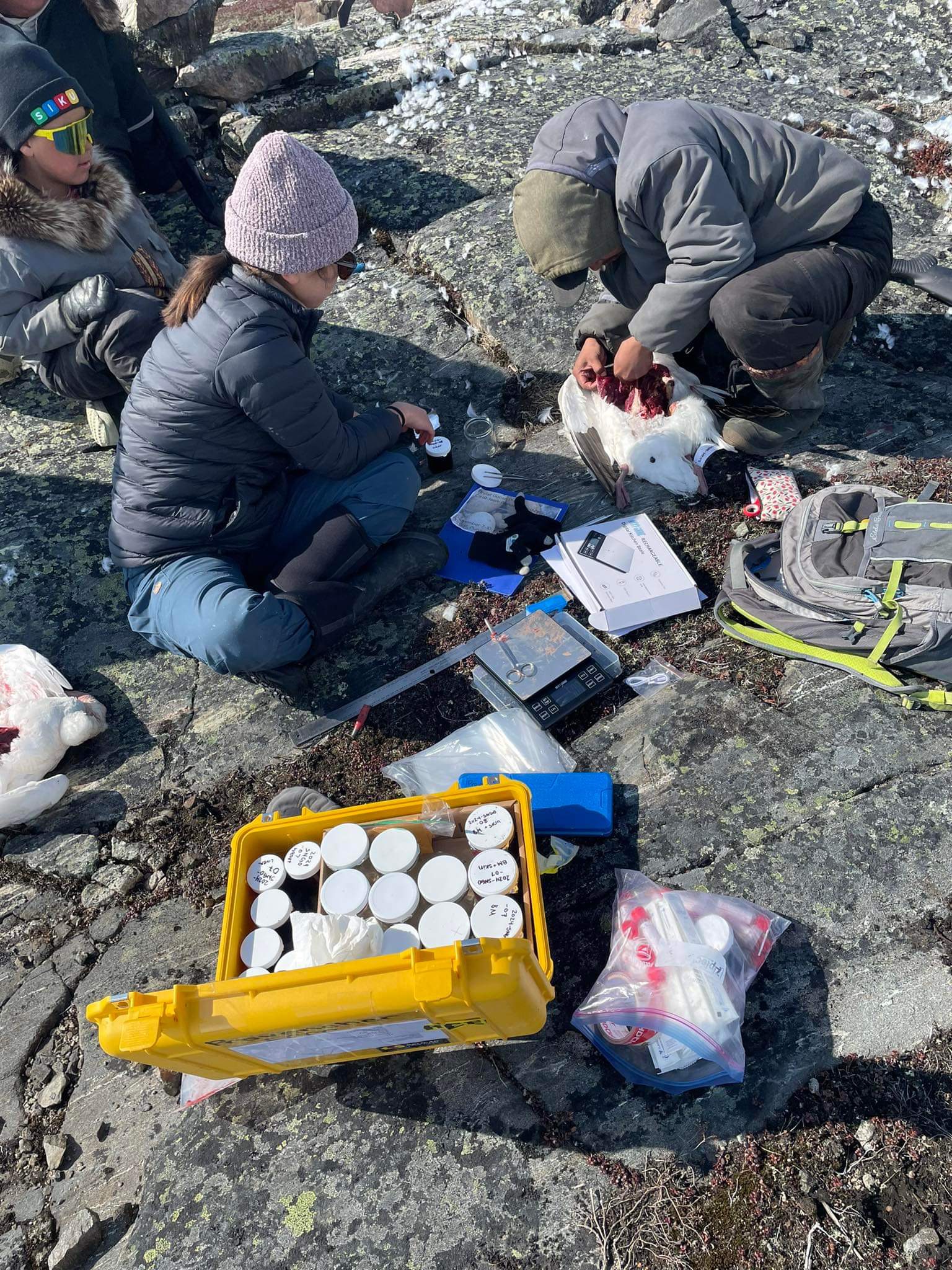
- Collected samples of breast muscle, gizzards, intestines, heart, liver, feathers and blood from Snow geese and Ross’s geese.
- Collected paired samples of raw, boiled, and roasted snow goose meat samples to characterize the effects of cooking on metal levels.
- Collected eggs from the nests of Cackling geese and Snow geese near Arviat and from remote locations, with the farthest nests located 30 km southwest of Arviat.
Goose hunting
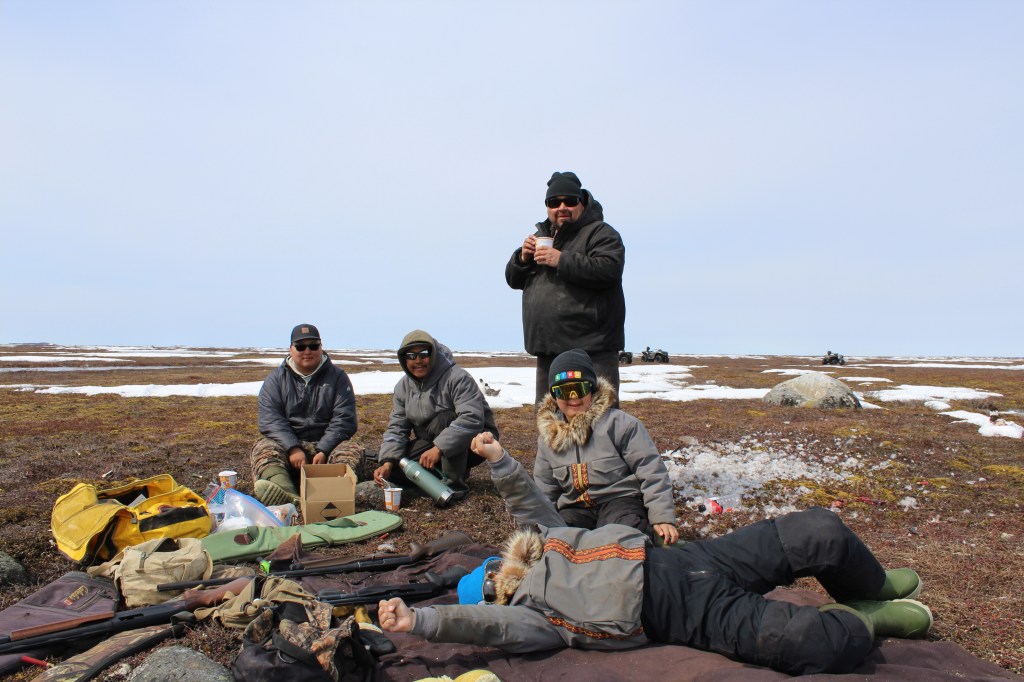
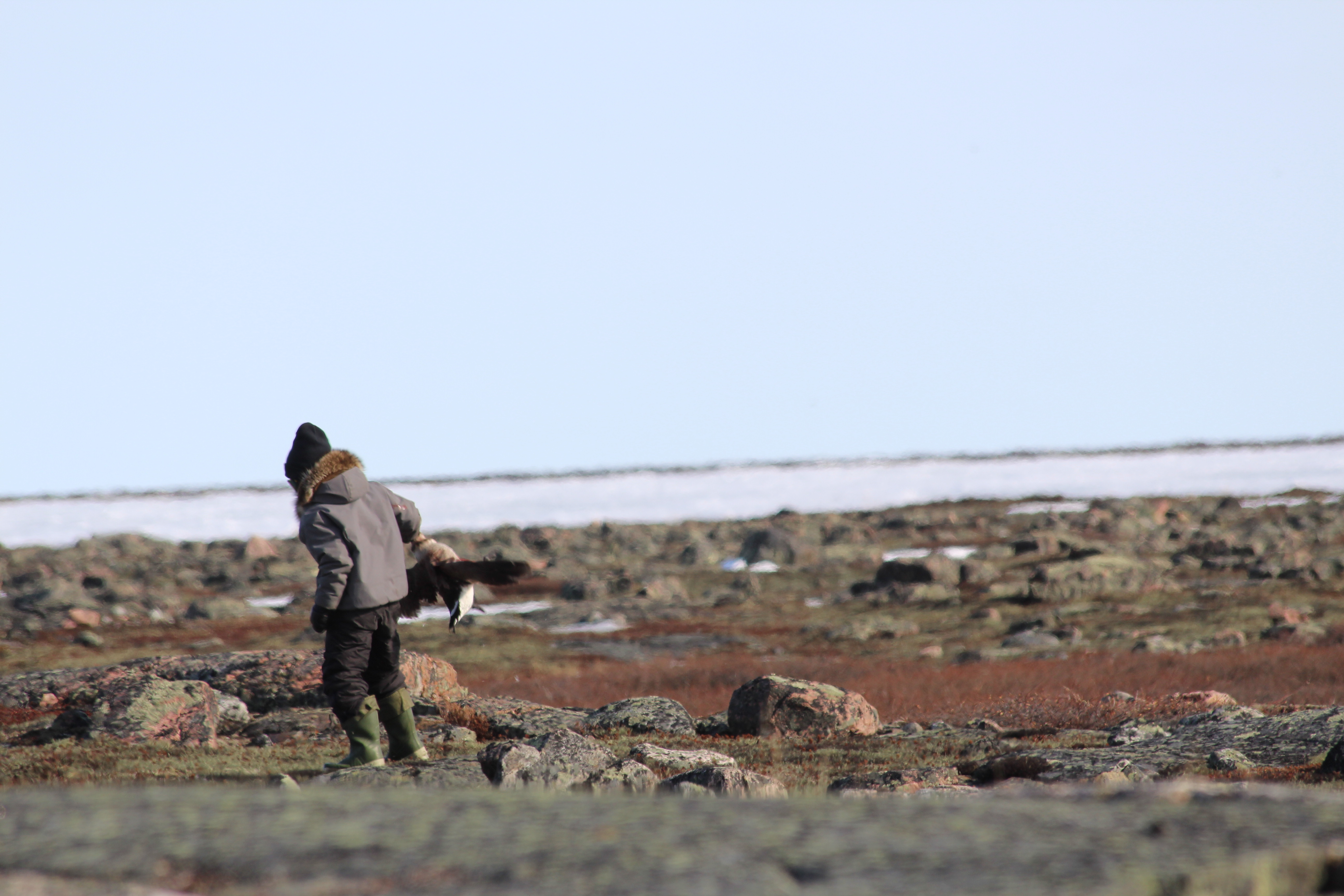
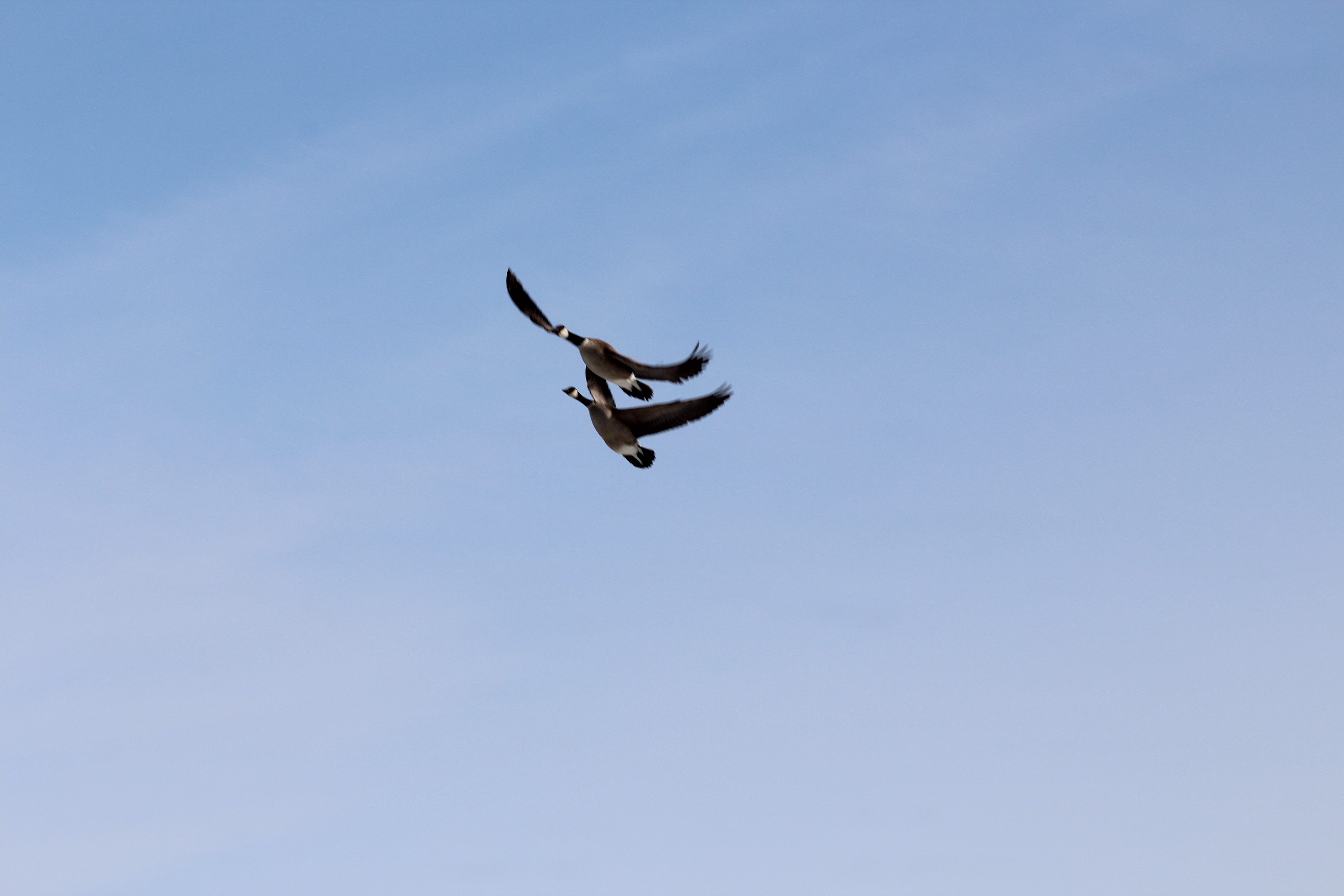
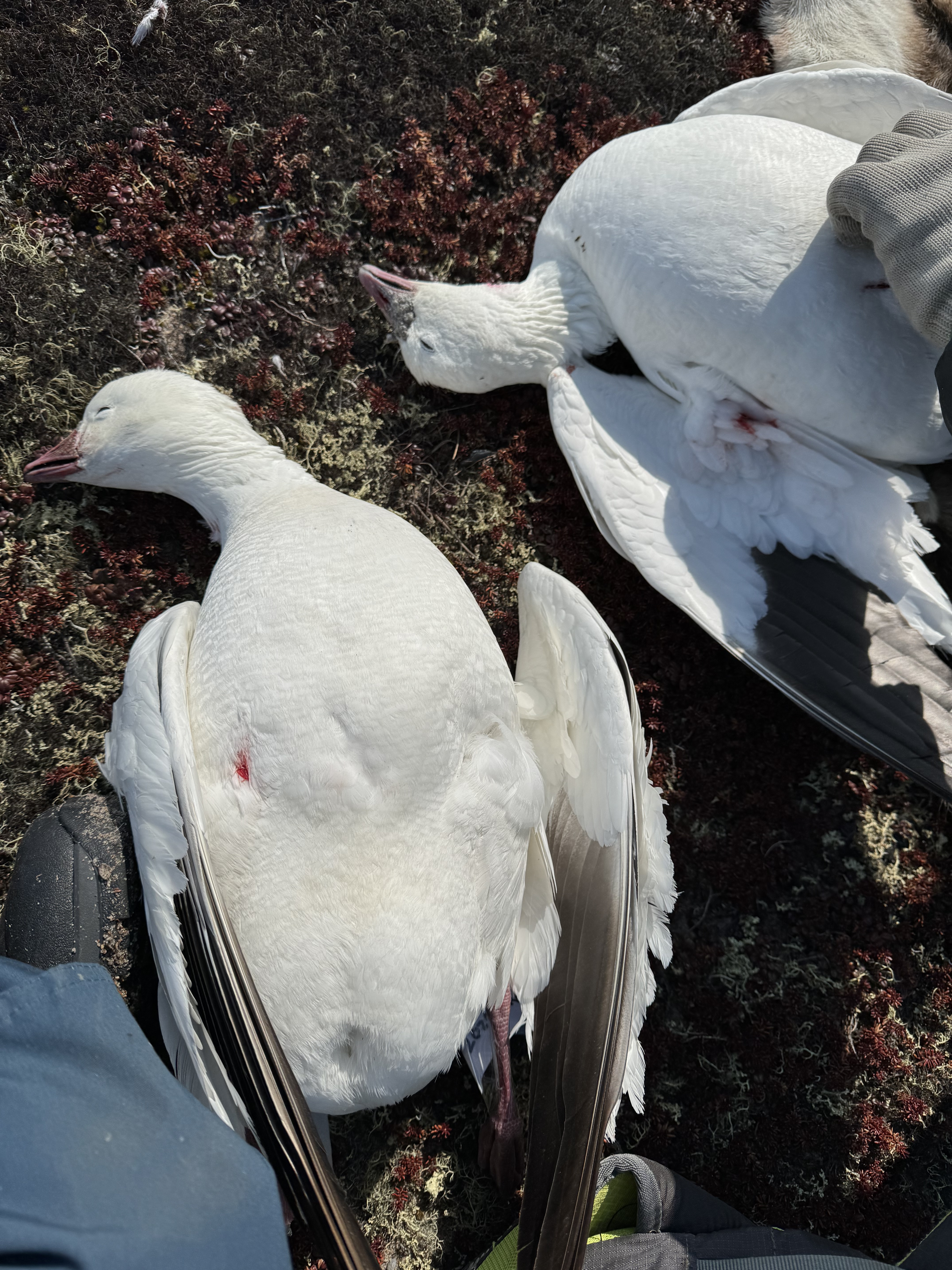
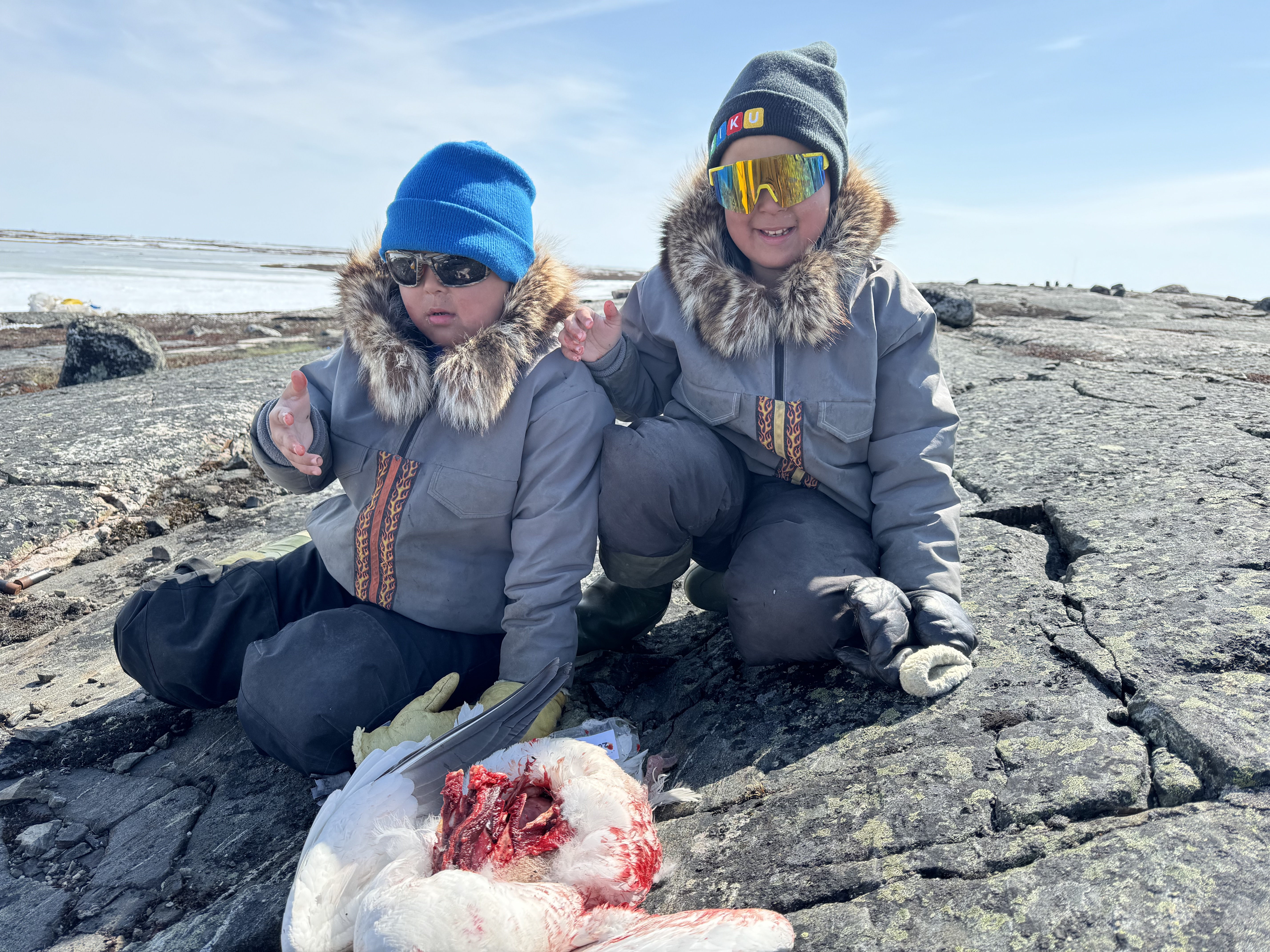
Geese began to arrive around Arviat in mid-May. First came the Cackling geese, then the Snow and Ross’s geese arrived together in the last week of May. Emily Wong accompanied Jimmy Muckpah (Ujjiqsuiniq Manager), Darryl Baker (Inuit Qaujimajatuqangit specialist), Lucas Owlijoot (Ujjiqsuiniq technician) along with Inuit youth enrolled in the Young Hunters Program, travelling on the land to hunt geese. This involved taking ATVs through the rapidly thawing snow on the tundra and lying low on caribou pelts under the sun, waiting for geese to fly overhead. Mixed flocks of Snow, Ross’s geese, Cackling geese, and Tundra swans all flew together. Alongside the geese and swans, we could also hear the distinct calls of Sandhill cranes, that had arrived to breed and nest.
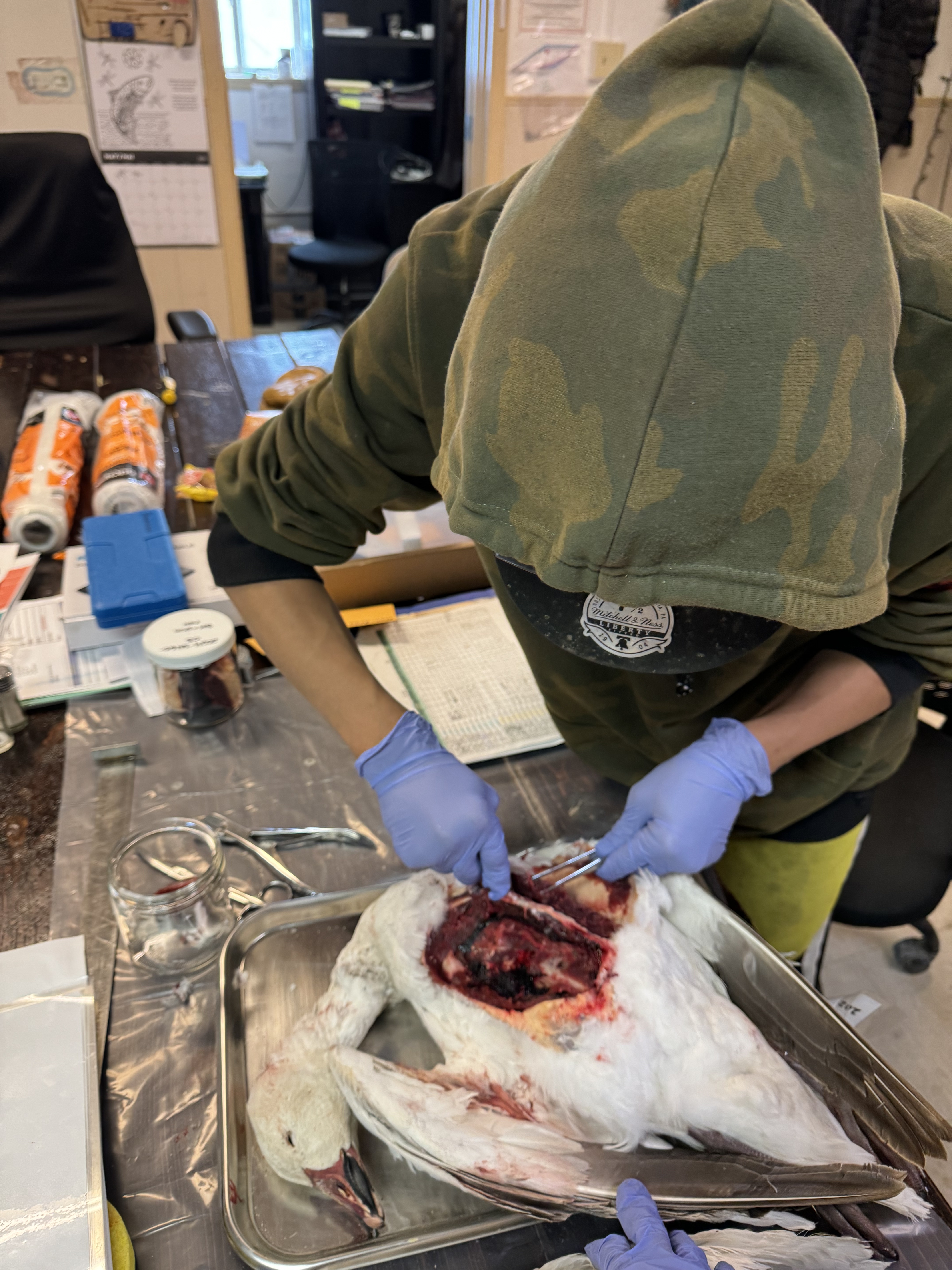
Young Hunters learned from Emily how to dissect geese for contaminants sampling and what techniques and equipment were necessary to keep samples “chemically clean”. They also learned how to assess the pectoral (breast) muscle condition, intestinal fat, and subcutaneous fat (fat under the skin) to determine the health of the bird.
Egging
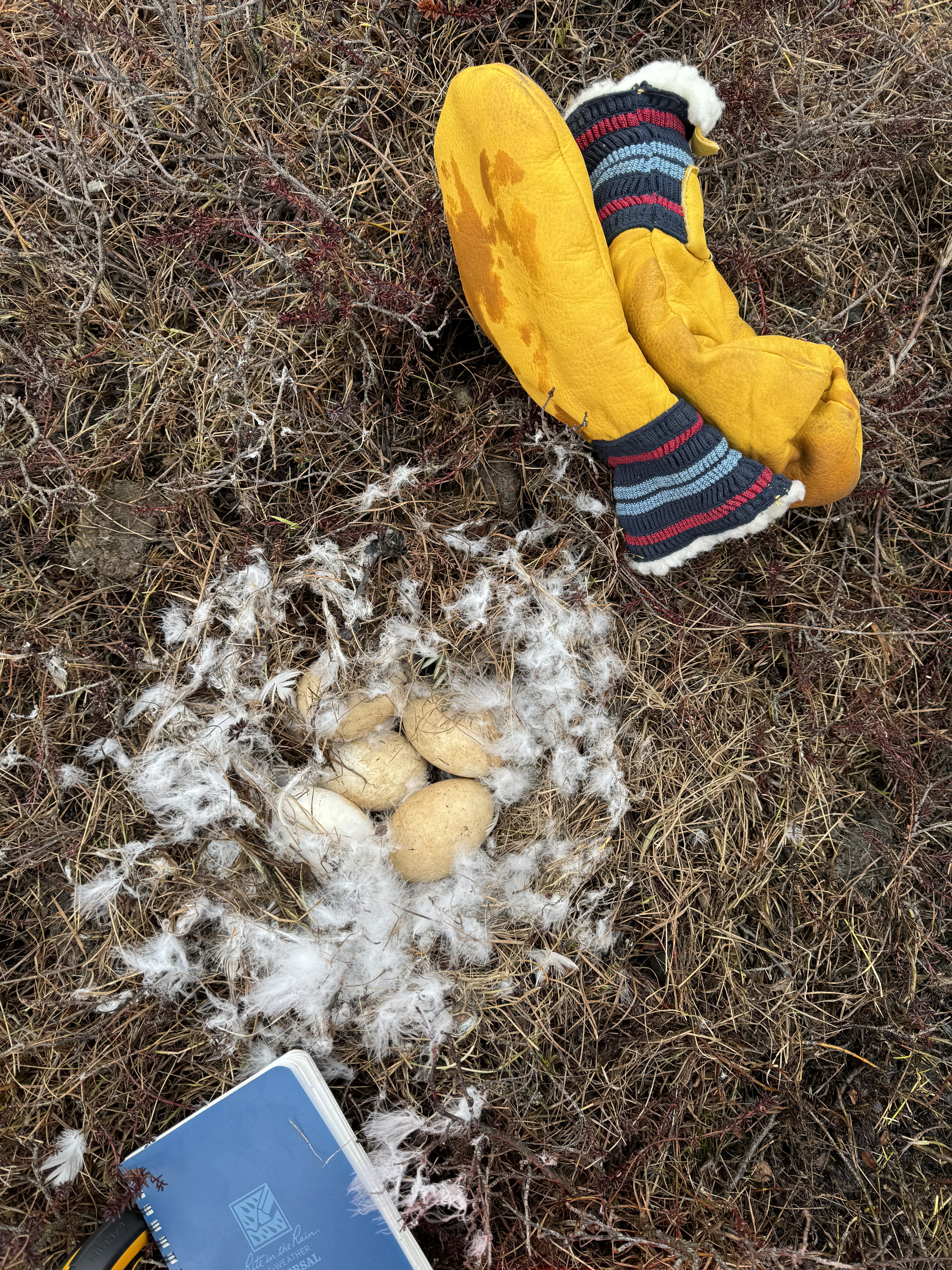
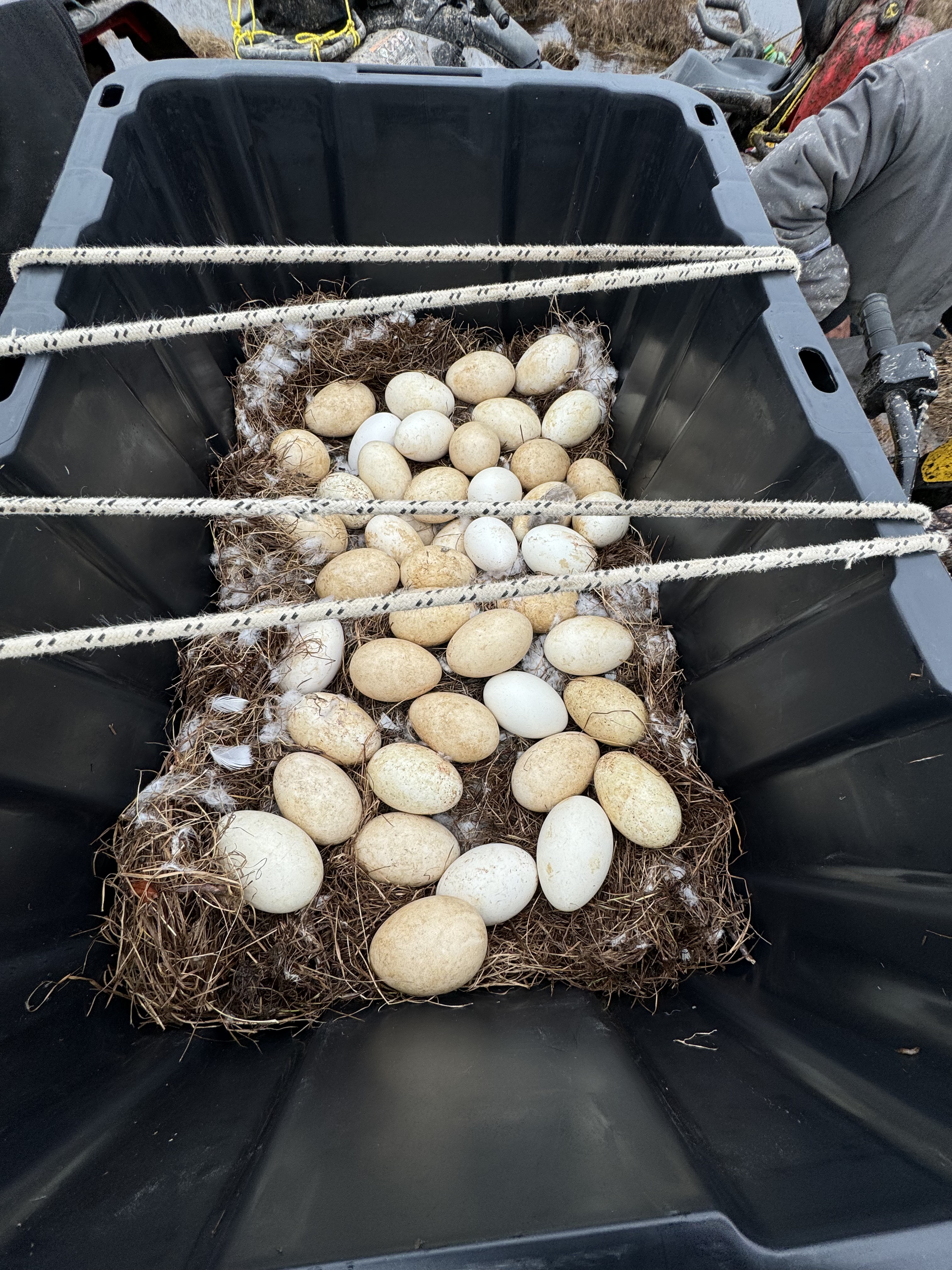
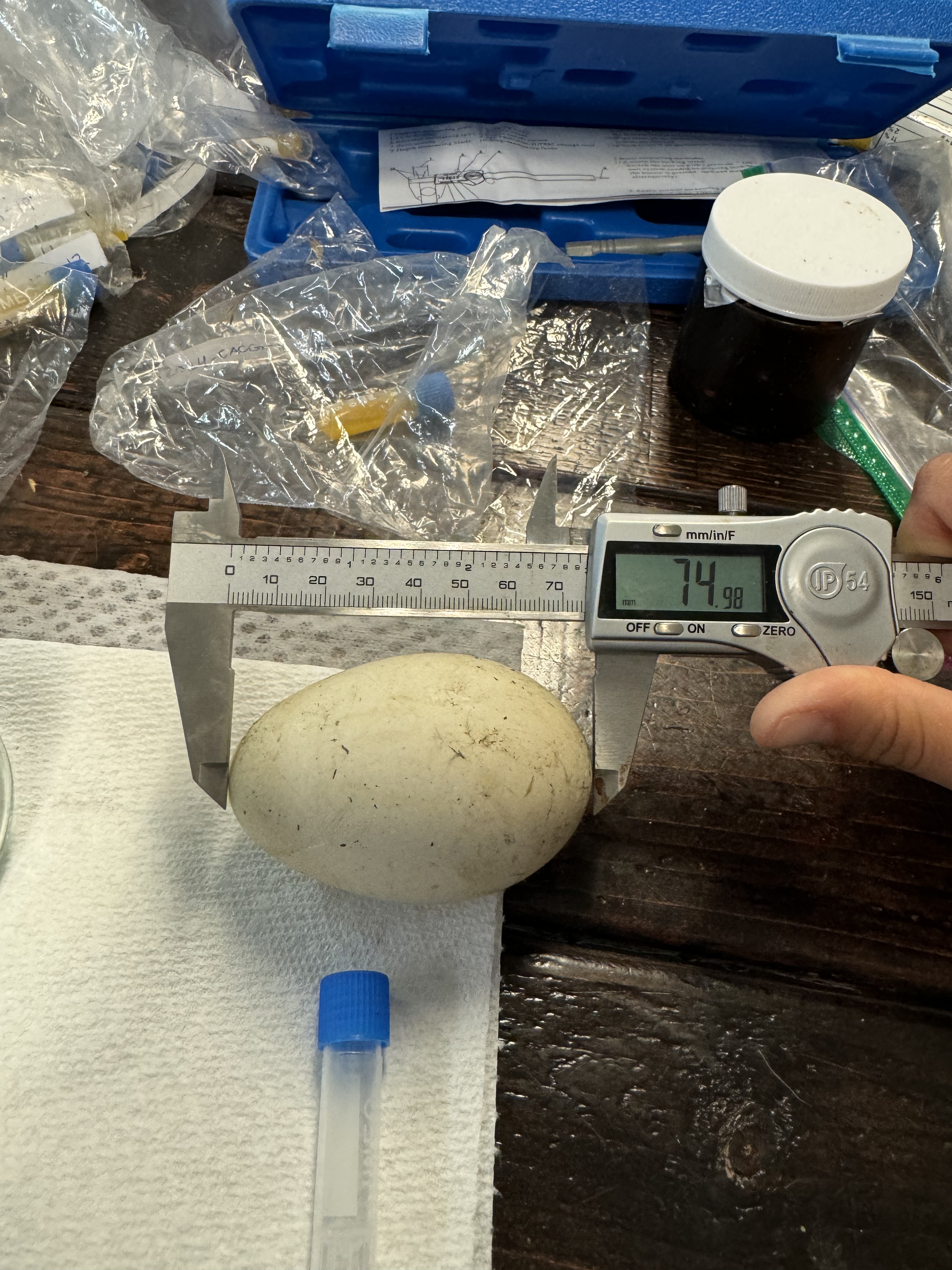
Geese began to lay their eggs in the last week of May. Ross’s geese used to nest around Arviat at great density, but in recent years they have shifted their migratory path and no longer nest close to Arviat. Emily and the Young Hunters team worked together over multiple days to collect eggs from Cackling geese and Snow geese. Darryl Baker taught Emily and the Young Hunters how to search for nests in the tundra ponds. Cackling geese are especially talented at camouflaging their nests with dry grass and they use very little of their own down, since it makes the nests more visible to predators. Cackling goose nests are usually on little islands, in the shallow water of the flooded tundra. In contrast, Snow goose nests are located farther from Arviat, about 30 km south, and closer to the Hudson’s Bay coast. We found Snow goose nests close together and marked by their bright white down.
Cooking
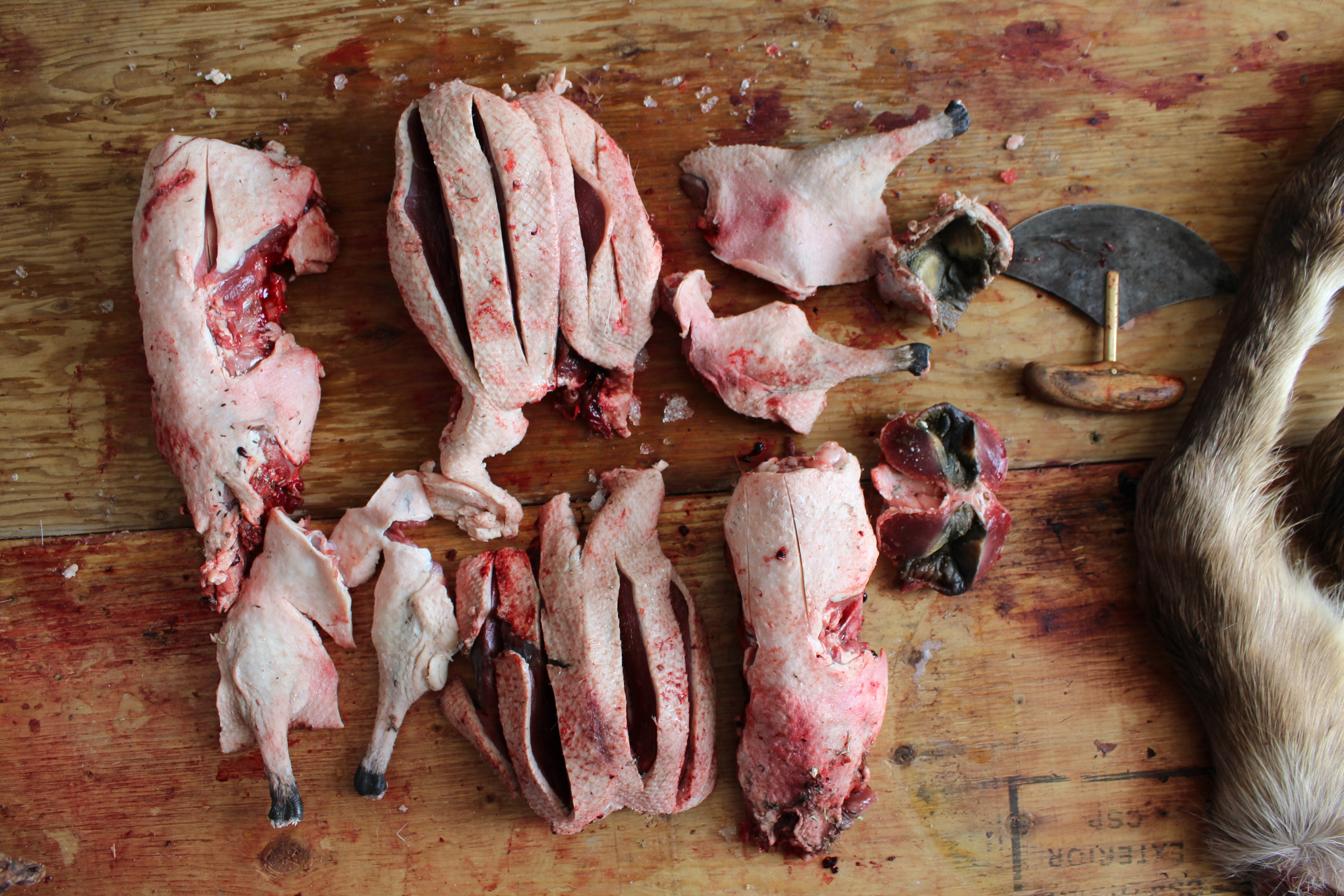
Elizbeth Irkok (Elder’s coordinator, Aqqiumavvik Society) made goose soup and showed Emily how geese are butchered with an ulu. Lizzie Alareak (Aqqiumavvik Elder) and Elizabeth Irkok discussed the parts of geese that are eaten, and different ways that geese are prepared.
Emily replicated these cooking methods at the Aqqiumavvik Office kitchen so that she could collect paired samples of raw, roasted, and boiled breast muscle. These samples are being tested for trace metals to characterize how cooking changes trace metal presence and concentration in geese.
Next Steps
Goose meat and egg samples were sent to the National Wildlife Research Centre (NWRC) in Ottawa for contaminants analyses. Next steps include:
- Continuing efforts to engage Young Hunters and the broader Arviat community in the goose health project;
- Developing terminology, materials, and programming to better explain contaminants monitoring to Young Hunters and the broader Arviat community; and
- Co-analyzing contaminants results to characterize trends, patterns, and implications for the consumption of geese by Arviarmiut.
Matna
Thank you to Kukik Baker and the entire team at Aqqiumavvik Society for welcoming me (Emily Wong) to Arviat and sharing your knowledge and stories of Arviat history, Inuit culture, Inuktitut, and geese. Thank you to Darryl Baker, Jimmy Muckpah, Chris Suluk, Alex Muckpah, Lucas Owlijoot and all the Young Hunters who were exceptionally generous with their time and knowledge. Thank you to Elizabeth Irkok and Lizzie Alareak for sharing your knowledge and recipes for geese. Thank you to Shelton Nipisar for your work to meaningfully translate contaminants messaging to Inuktitut.
We are continually grateful for the warm welcome in Arviat and to all those who share their time and knowledge in contributing to this project.

