
Trip summary by: Regena Sinclair, Rowan Harris
Arviat, Nunavut (April 6 – 30, 2024)
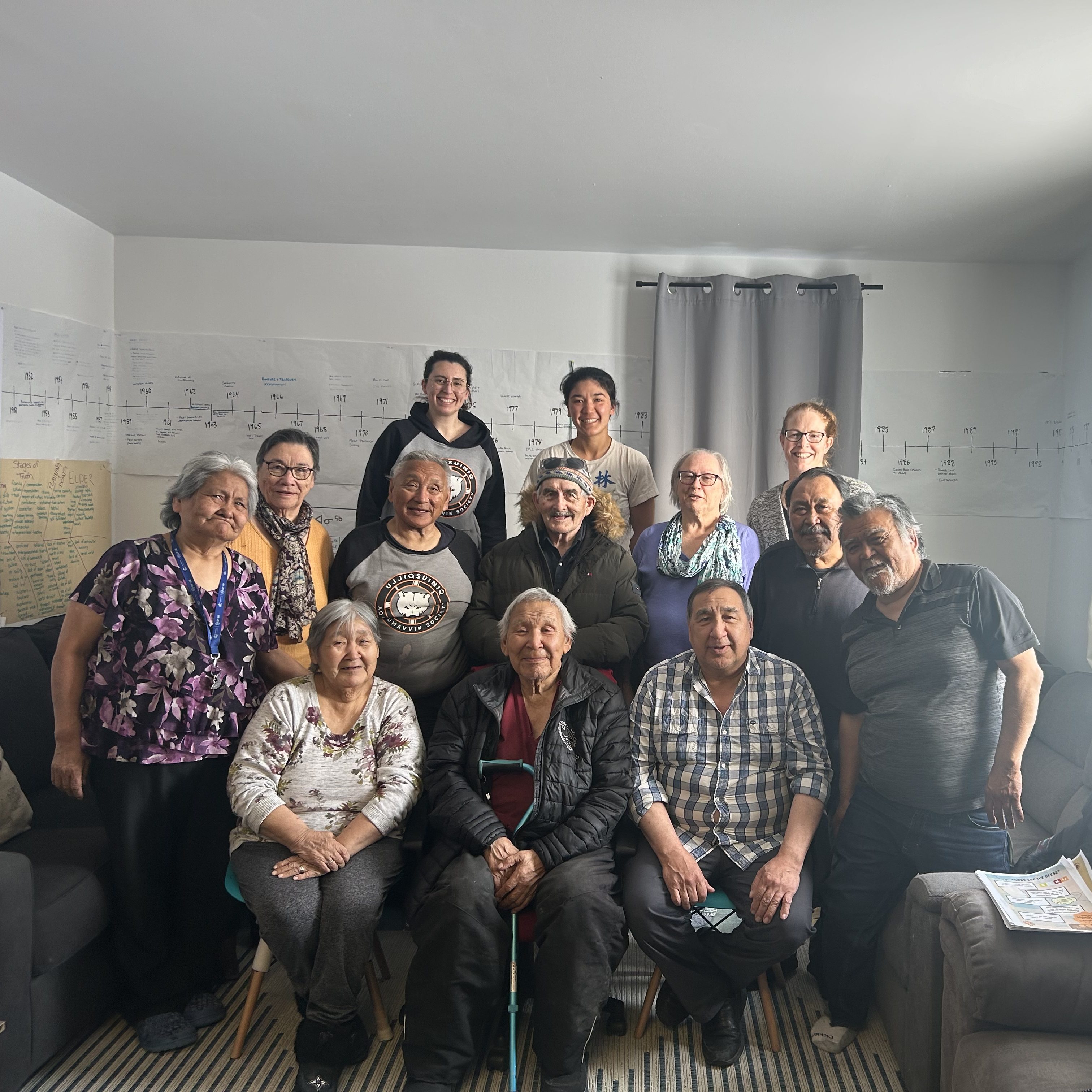
Left to right, standing at back: Regena Sinclair, Rowan Harris, Gita Ljubicic
Left to right, standing middle row: Linda Kaviok, Dorothy Aglukark, Andrew Panigoniak, David Alagalak, Shirley Tagalik, Arden Nibgoarsi, Gordon Okoktok
Left to right, sitting at front: Lisa Gibbons, Mike Gibbons (Tunaala), Joe Karetak
Missing: (Kukik Baker)
Photo by: Ramon Kaviok
All photos below by: Rowan Harris, Regena Sinclair, Gita Ljubicic
Purpose of Visit
Gita Ljubicic (SUN Team Lead), Regena Sinclair (SUN Team PhD student) and Rowan Harris (SUN Team MA student) travelled to Arviat, Nunavut, to continue our research with Aqqiumavvik Society on the CIHR Goose Project.
Rowan spent just over three weeks in Arviat (April 6 – 30) learning from a goose terminology workshop (April 9 – 12), spending time at Aqqiumavvik offices, and informally engaging with Arviarmiut (people of Arviat). Gita and Regena joined Rowan (April 22 – 30) to learn from a follow-up goose terminology workshop and to develop project infographics about our project (April 24-26). All workshops were facilitated by Joe Karetak (Aqqiumavvik Society Inuit Qaujimajatuqangit Research Coordinator), and important additional time was spent meeting with Kukik Baker (Executive Director of Aqqiumavvik Society) and Shirley Tagalik (Chair of Aqqiumavvik Society Board of Directors) to get feedback on graduate research objectives to contribute to Aqqiumavvik project goals. We all appreciated this time to reconnect and work together in person after so many Zoom calls.
The goals of the trip included:
- Building trust and good working relationships among team members;
- Developing shared understandings of goose-related terminology; and,
- Refining research objectives for Rowan and Regena.


Goose Terminology Workshop
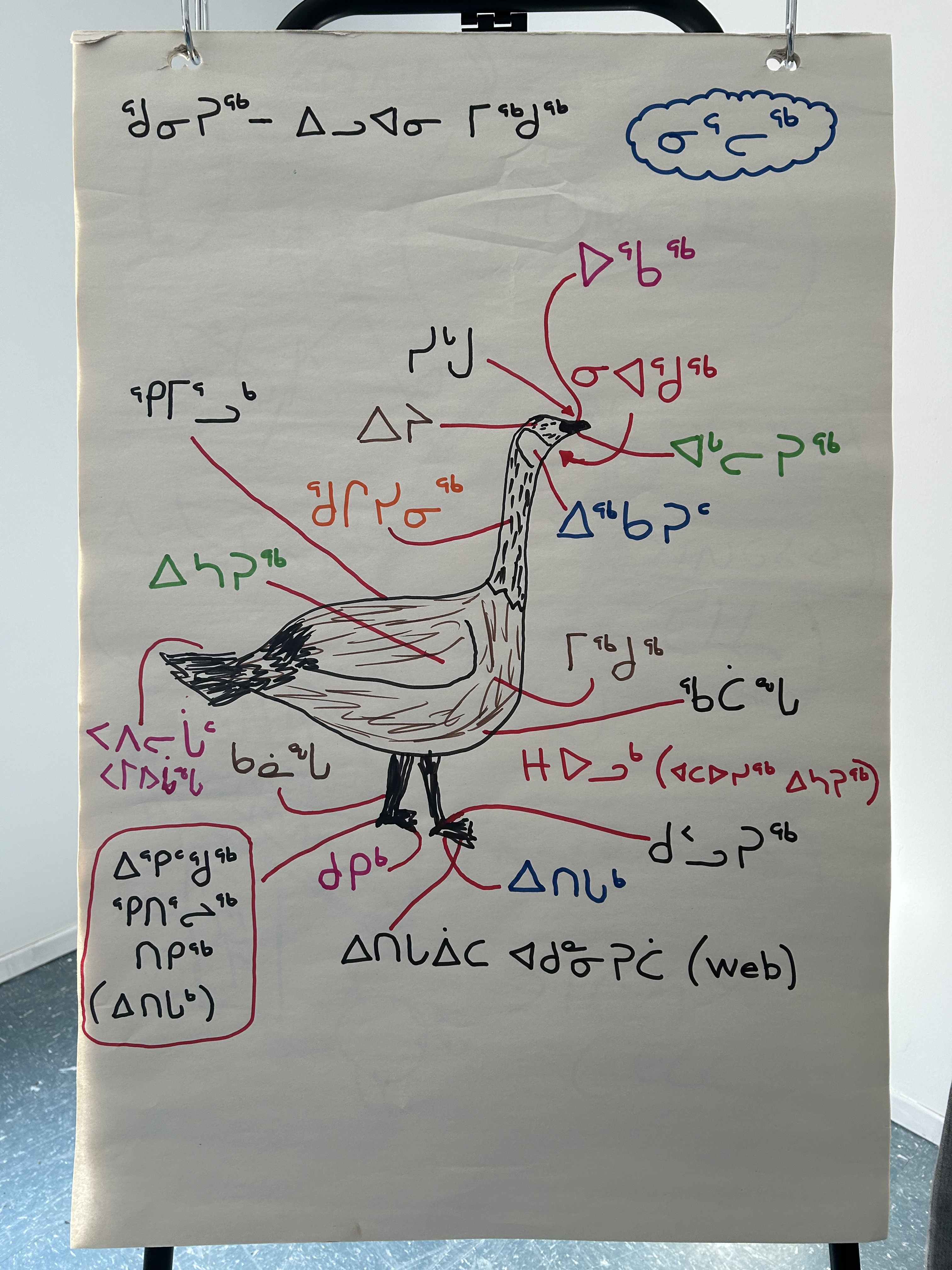
Rowan joined Joe, and Elders Andrew Panigoniak, Lisa Gibbons, Mike Gibbons (Tunaala), Linda Kaviok, Dorothy Aglukark, David Alagalak, Arden Nibgoarsi, and Gordon Okoktok for a weeklong goose terminology workshop. Throughout the week, Elders discussed and identified specialize Inuktitut terminology associated with goose anatomy, traditional uses of geese, and goose habitat.
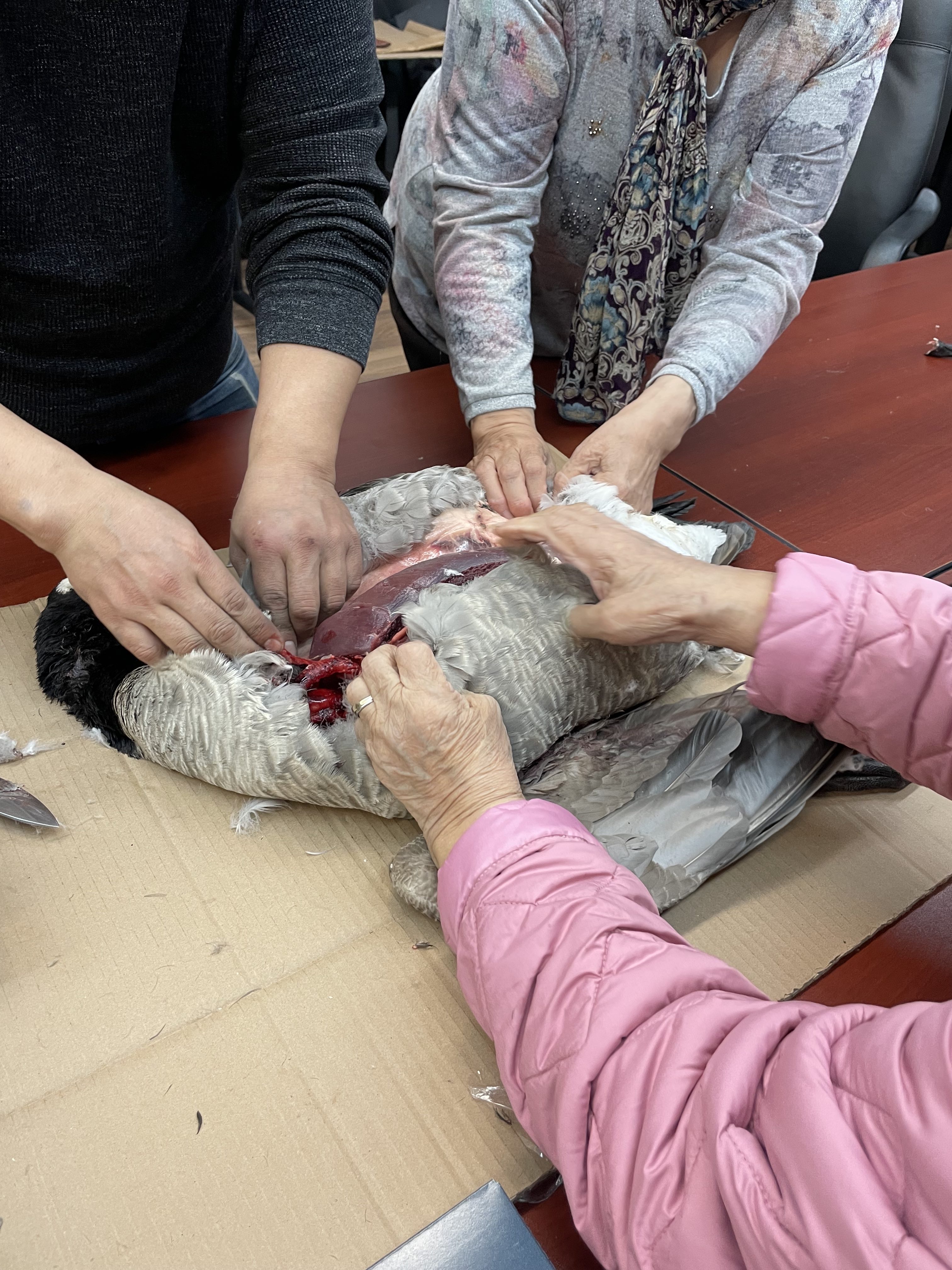
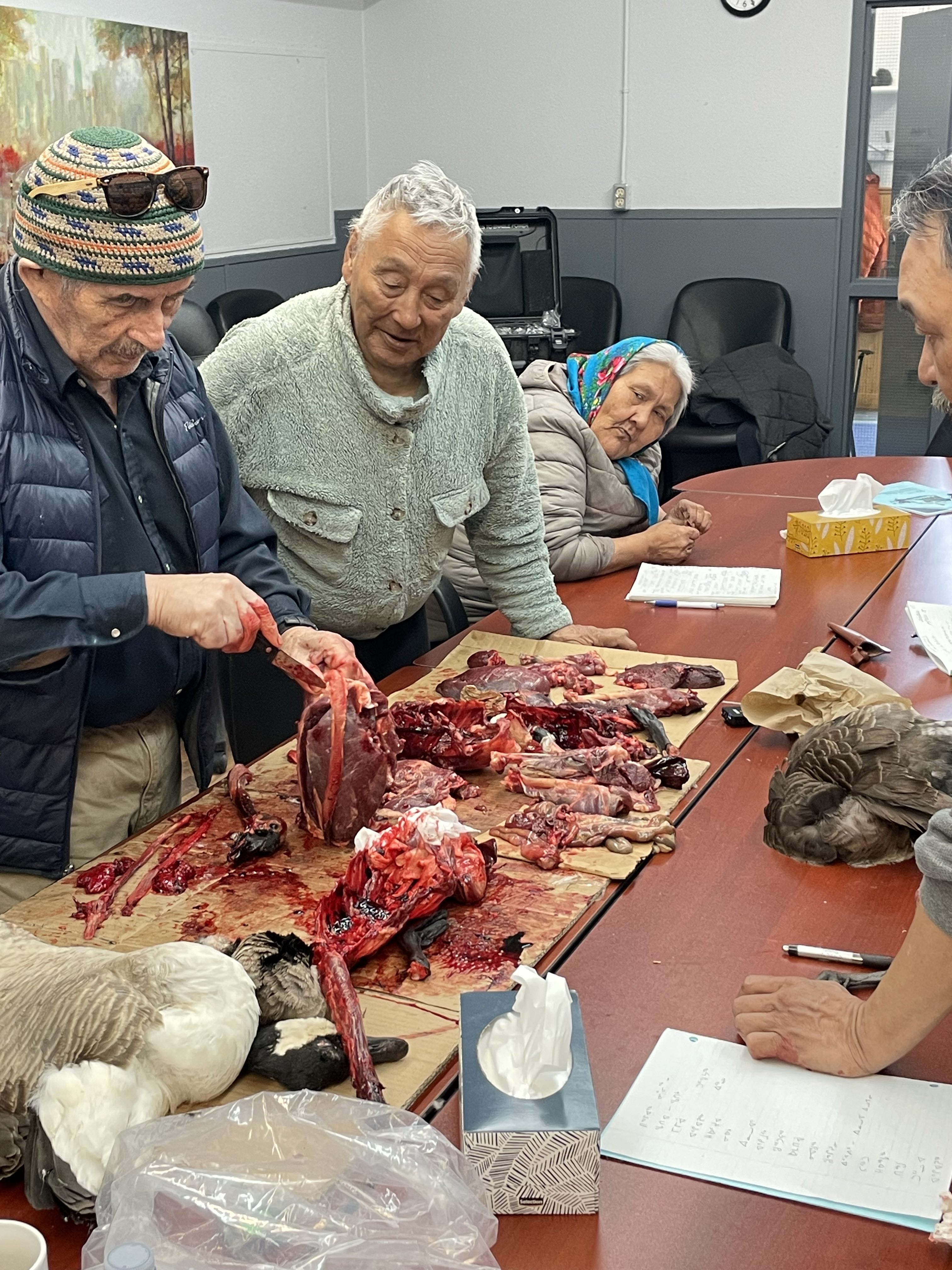
During a goose dissection, Elders engaged in a hands-on approach to discussing internal and external goose anatomy. This was a fantastic learning opportunity because it was much easier to discuss specific terminology when looking at and handling a goose. It was also enjoyable to share a meal of cooked goose afterwards, and it became a running joke as workshop members realized that the dissected goose was eaten before the reproductive system could be examined!
During the dissection,Elder Dorothy demonstrated how to make a bag with goose skin which was traditionally used to keep sewing materials dry or to transfer fire embers from one igloo to another. Rowan was also shown how to make a small bag out of a goose’s foot by separating the skin from the bones with a bone from the wing.
The week continued with more discussion on goose habitat, uses, and diet. We explored egg development and the molting process of geese, terms for different goose species, their fat composition, and habitat preferences. Scientific terms such as contaminants, pathogens, disease, and viruses were discussed in detail with the objective of determining what is important for community members to know and understand. Dialect differences were also highlighted during discussions with several Elders originating from outside of Arviat (Coral Harbour) to consider how to incorporate different terms.
Throughout the week Elders shared reflections on government regulations impacting Inuit traditional dietary practices and emphasized the importance of language diversity, cultural preservation, and environmental stewardship. They discussed practical uses of geese and proposed the formation of an Elders Society to strengthen cultural transmission and stewardship efforts.


Building Relationships / Piliriqatigiingniq
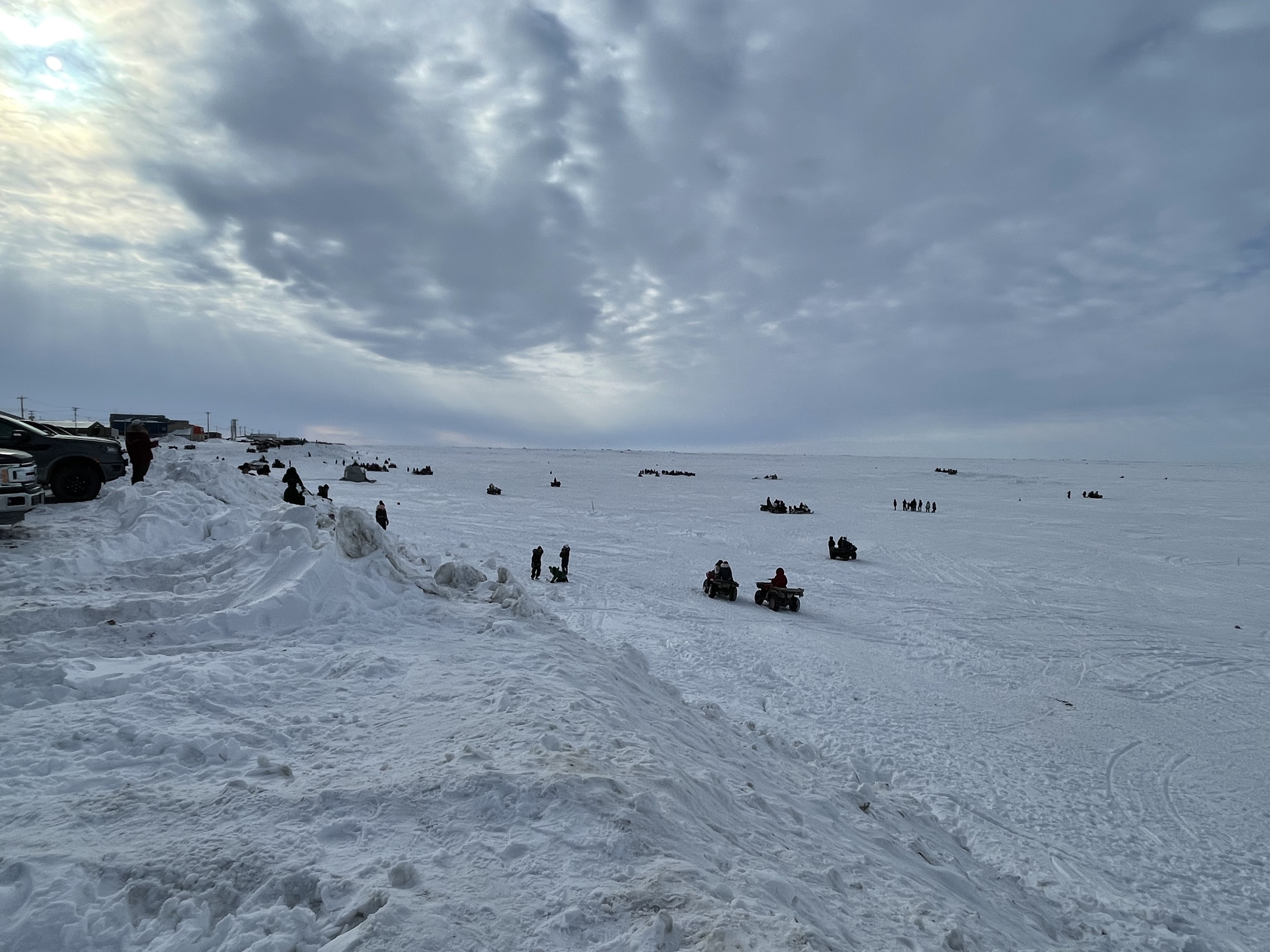
Building relationships is the first stage of the Aajiiqatigiingniq Research Methodology (ARM) and emphasizes the importance of establishing mutual trust at the beginning of the research process. Rowan joined a two-night muskox hunting expedition organized by the Aqqiumavvik Society and led by the Arviat Young Hunters. This trip included eight students and an Elder from Naujaat as well as 10 leaders and youth from Arviat Young Hunters traveling on skidoos pulling qamutiks loaded with equipment and people. This provided an in-depth experience of Inuit cultural practices and fostered strong connections among all those who participated. Being actively involved in the hunt and food preparation was incredibly rewarding. Time on the land brought people closer together through shared experiences like travelling overnight into the early morning and the intensity of the muskox butchering process. This experience helped to establish a solid foundation of good relationships based on trust, respect, and shared cultural appreciation.
By attending lively open gym nights at the high school we also met Arviarmiut through volleyball and basketball games, and weight room workouts. Rowan shared her strength and conditioning training experience, Gita got to drop off volleyball equipment and play some games, and Regena contributed to the cheering section. We also got to take in the action of the snowmobile races.




Building Understanding / Inuuqatigiitsiarniq
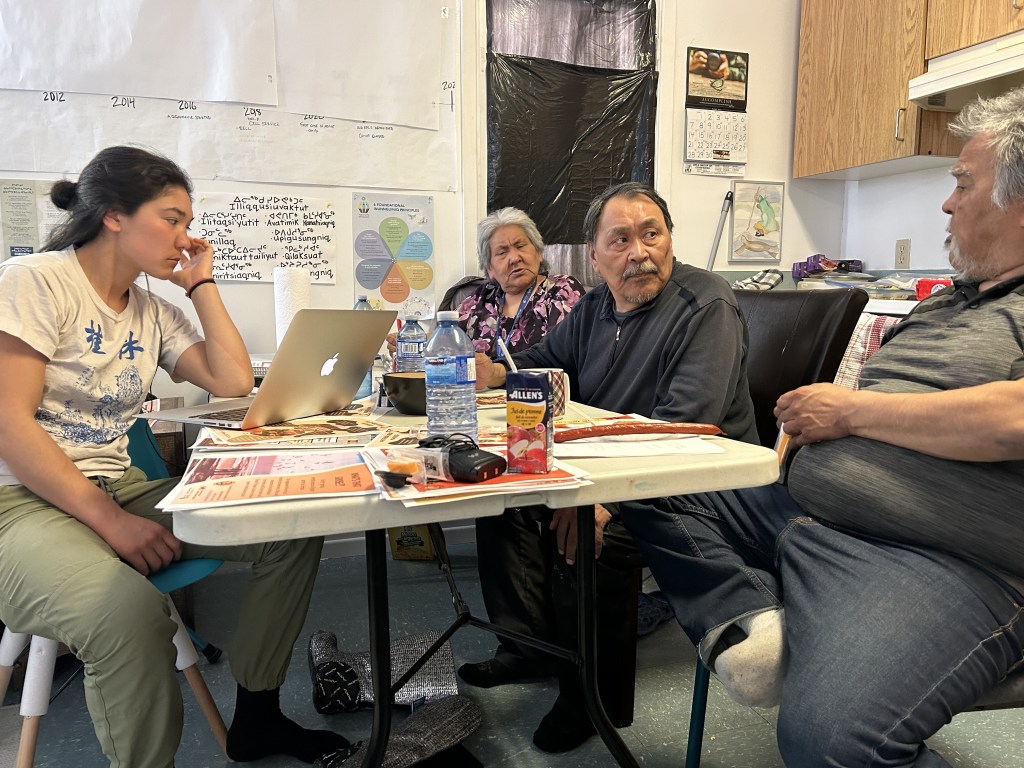
A key component of the ARM is building shared understanding of terms and research context. The team spent four days working with Joe, Shirley and Elders Andrew, Lisa, Mike (Tunaala), Linda, Dorothy, David, Arden, and Gordon to collectively learn Inuktitut terminology related to harvesting geese and identify issues that can arise in the translation process. As Joe explained, connecting and understanding concepts between languages is like solving an algebra equation with an unknown factor. As a group, we worked to collectively solve parts of this equation by refining a set of infographics about goose health, hunting, and gathering that Aqqiumavvik wants to use to share project information with Arviarmiut on social media.
Gita and Regena used Canva to make changes to the infographics as recommendations were made, responding to feedback and reviewing edits in real time. This process was invaluable to the development of graphics that present group-identified key community messages that are communicated effectively in English and Inuktitut. These discussions were critical in developing shared understanding regarding concepts conveyed in different languages, to avoid misunderstandings to inform the project going forward.
“English is one language, Inuit is multiple languages”
Elder Arden Nibgoarsi


Co-development of graduate research projects
Rowan, Gita, and Dominique Henri (Environment and Climate Change Canada, joined virtually) met with Shirley to discuss the direction and objectives of Rowan’s master’s project. During the discussion, they explored how Rowan’s project would align with community objectives related to identifying holistic indicators of goose health. They also reviewed the Aajiiqatigiingniq Research Methodology (ARM) and its relevant stages. Shirley recommended incorporating kitchen table talks, where a larger group of people can gather informally at a community member’s house to discuss the research topic. They also reviewed Rowan’s specific project objectives in detail. Additionally, they discussed the timeline and identified the best time for Rowan to return to Arviat for the data collection stage of the project (August 2024).
Regena, Gita, and Dominique also met with Shirley to discuss Regena’s PhD direction and objectives. The direction of the project was informed by the workshop and discussions the previous week (as well as the Aajiiqatigiingniq workshop held in November 2023), resulting in a research framework based on identified community interests and the ARM. Regena is excited to explore how a goose harvest renewal might support food sovereignty in Arviat.
Matna
Thank you to all the Aqqiumavvik Society staff, Elders, and community members who generously welcomed and hosted the visiting team members while in Arviat. Thank you to Joe Karetak for help with workshop communications as he interpreted between English and Inuktitut. Thank you to Jimmy Muckpah, and the Arviat Young Hunters as well as Ramon Kaviok for including Rowan in land trips, and to all those in Arviat who so warmly welcomed us and shared their time with us.
Thanks to all involved for dedicating your time and effort, to make this project so meaningful, and the outcomes so valuable.

 StraightUpNorth.ca