
Trip summary by: Natalie Carter, Alexis Beltrano, Faith Rahman, and Maddy Lutes
Clapiers and Montpellier, France (May 9 – 18, 2025)

All photos by: Natalie Carter, Alexis Beltrano, Faith Rahman, Gita Ljubicic, Nova Ljubicic
Purpose of Visit
In May 2025, SUN Team members Alexis Beltrano, Faith Rahman, Maddy Lutes, and Natalie Carter, journeyed to Clapiers, France to reunite with SUN Team lead Gita Ljubicic, and participate in a two-day research methodology knowledge exchange with colleagues at CIRAD (French Agricultural Research Centre for International Development). During our time together SUN Team members also dedicated three days to reflecting on our core values as a team, and explored how these values continue to guide and strengthen our community-engaged research.
Our two main goals were:
- Strengthening Research Collaborations:
To engage directly with colleagues at CIRAD, share about our ongoing research and methodology, identify areas of shared interest, and explore new opportunities for collaboration. Face-to-face interaction helped us begin and deepen professional relationships, as well as inspire new research directions. - Reflecting on and Reaffirming Team Values:
To create space for our team to reflect on the core values (such as humility, trust, and integrity) that guide our work. These conversations helped ensure that our research practices continue to align with our shared principles (amongst ourselves and with our northern partners), and they reinforce a respectful, open, and compassionate team culture.
CIRAD-SUN Workshop
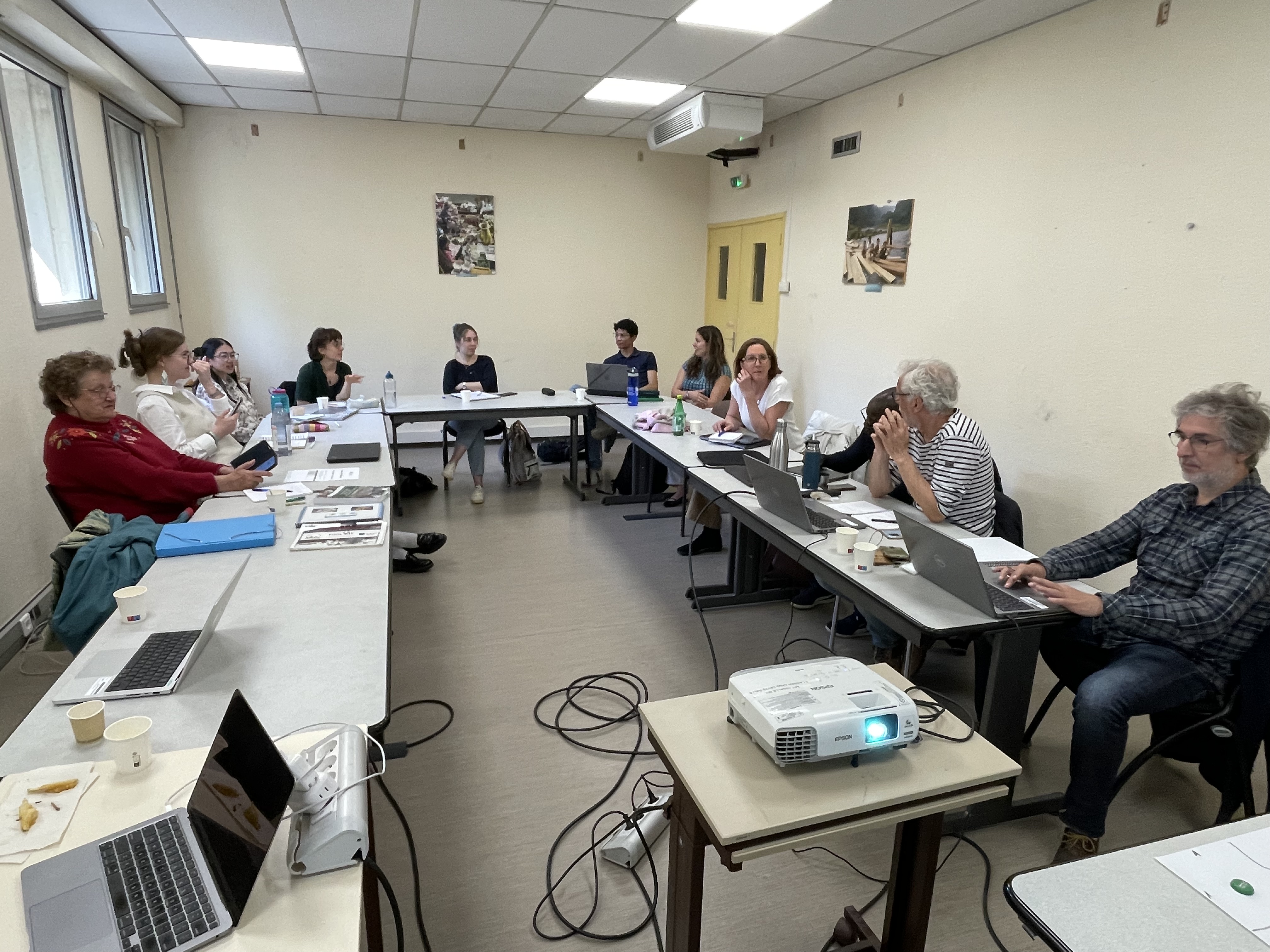
At the CIRAD–SUN workshop held May 13–14, 2025 in Montpellier, France, SUN Team members and French researchers from the UMR SENS research unit (Joint Research Unit (UMR), Knowledge, Environment and Society (SENS)) came together for the first time at the CIRAD Lavalette campus. Over two intense and inspiring days, we shared methodologies and explored collaborative opportunities in community-driven and community-engaged research. Our workshop had a strong emphasis on ways to engage a wide range of Indigenous, public, and decision-making audiences in dialogue for research design, conservation initiatives, and education across Africa, Canada, and South America.

Following our introductions, the focus of the first day was to learn through experience about the value of role-playing games (RPGs, also known as serious games) as icebreakers, tools for environmental and resource management research, and sparking critical dialogue. CIRAD team members Christophe Le Page, Didier Bazile, William’s Daré, and Céline Fromont effectively demonstrated the power of RPGs first-hand by kicking off our workshop with an immersive resource management simulation game called “Planet C-Play again?”.
Planet C is an interactive role-playing game designed to simulate the real-life complexities of managing natural resources under varying environmental and regulatory conditions. Participants assumed different roles, such as park wardens and farmers, with each role governed by specific rules and responsibilities. The simulated environment was displayed both digitally and as an analogue board game (chart paper and bottle caps); featuring diverse land use zones that included protected areas, important habitat, and regions with varying agricultural productivity.
Working closely in pairs with CIRAD team members, we explored how such serious games can facilitate rights-holder and stakeholder engagement in decision-making, illustrate potential policy impacts, and enhance collaborative problem-solving. Within minutes, our CIRAD-SUN group was completely engrossed in the decision-making processes and group discussion aspects of the game, bringing us swiftly from a group of acquaintances to friends and even “foes”. The game involved both cooperation and competition, trying to find a balance and weigh the impacts of feeding their families or protecting habitat of an endangered bird species. The process prompted strategic decision-making and stakeholder negotiation. It was a delicate balance that proved very challenging to achieve. The result was engaging: a surprisingly cutthroat yet fun way to discuss possible scenarios in experimenting with different resource extraction outcomes.
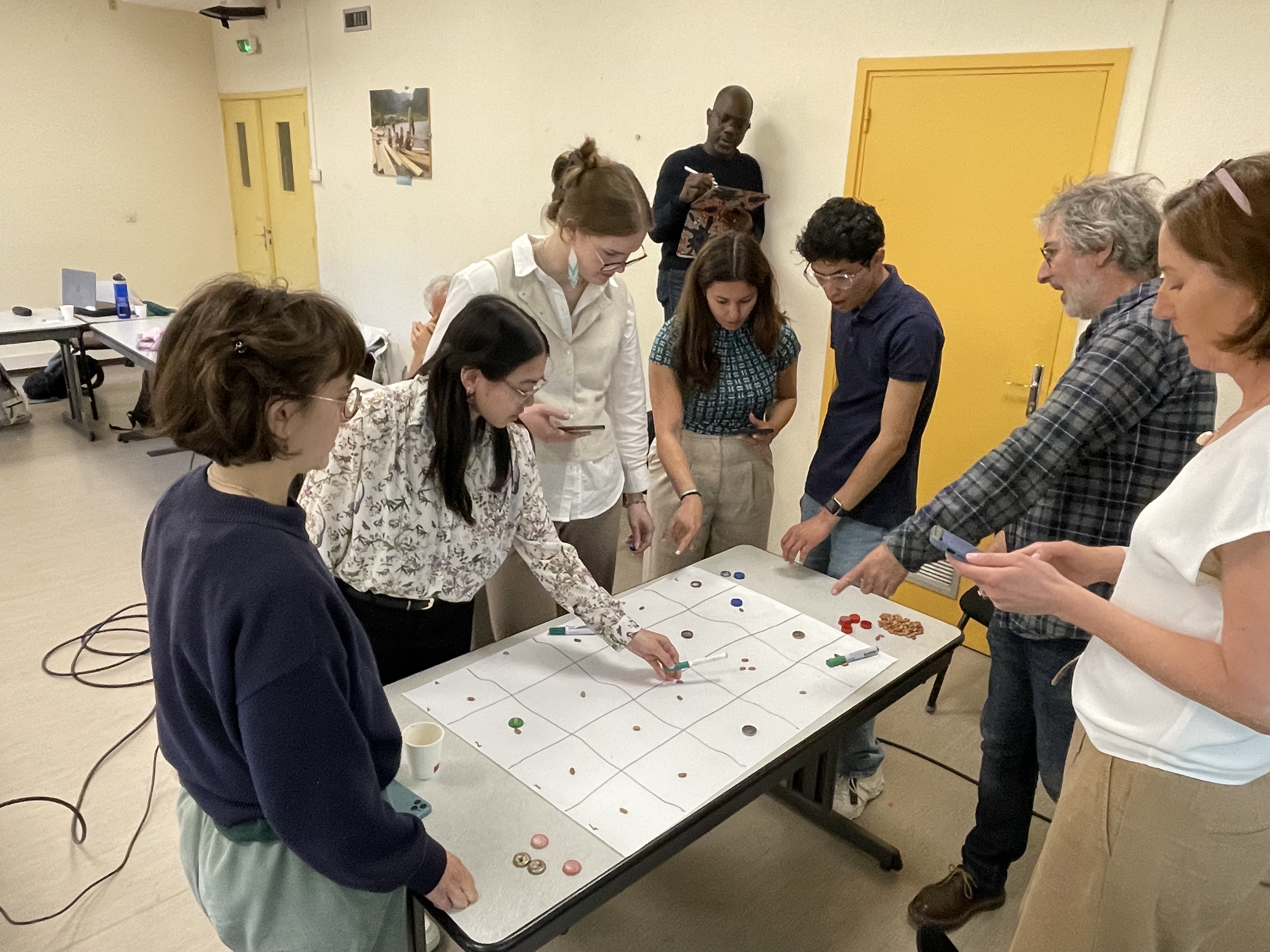

It was a very thought-provoking experience, and what struck us was the clear versatility of this kind of game as a valuable tool to prompt dialogue and explore diverse perspectives to inform environmental governance and sustainability planning. Those at UMR SENS use RPGs in their work in a wide range of contexts, from elementary classrooms with digitally projected board game formats to life-size versions in grassy fields and co-developed customized versions with farmers and herders in multiple African countries. Activities were eye-opening, and they really got us thinking about how we could adapt and apply serious games into the work that we do!

The second day of the workshop featured a presentation by Nicolas Gaidet-Drapier (UMR-SENS) sharing his research exploring – and broadening perspectives on – human-animal relationships. He showed examples from the “Otter Project”, part of the Vies-à-Vies documentary initiative uses multimedia storytelling to deepen public engagement and reflection. It was a compelling method that involved showing people clips of what happens in natural spaces like paths, riverbanks, and meadows when humans aren’t around. Through carefully crafted seasonal videos, it reveals the diverse life, both human and non-human, that inhabits these places. Daytime and nighttime footage is used to show overlapping uses and to get people to reflect on shared spaces and animals as neighbours.
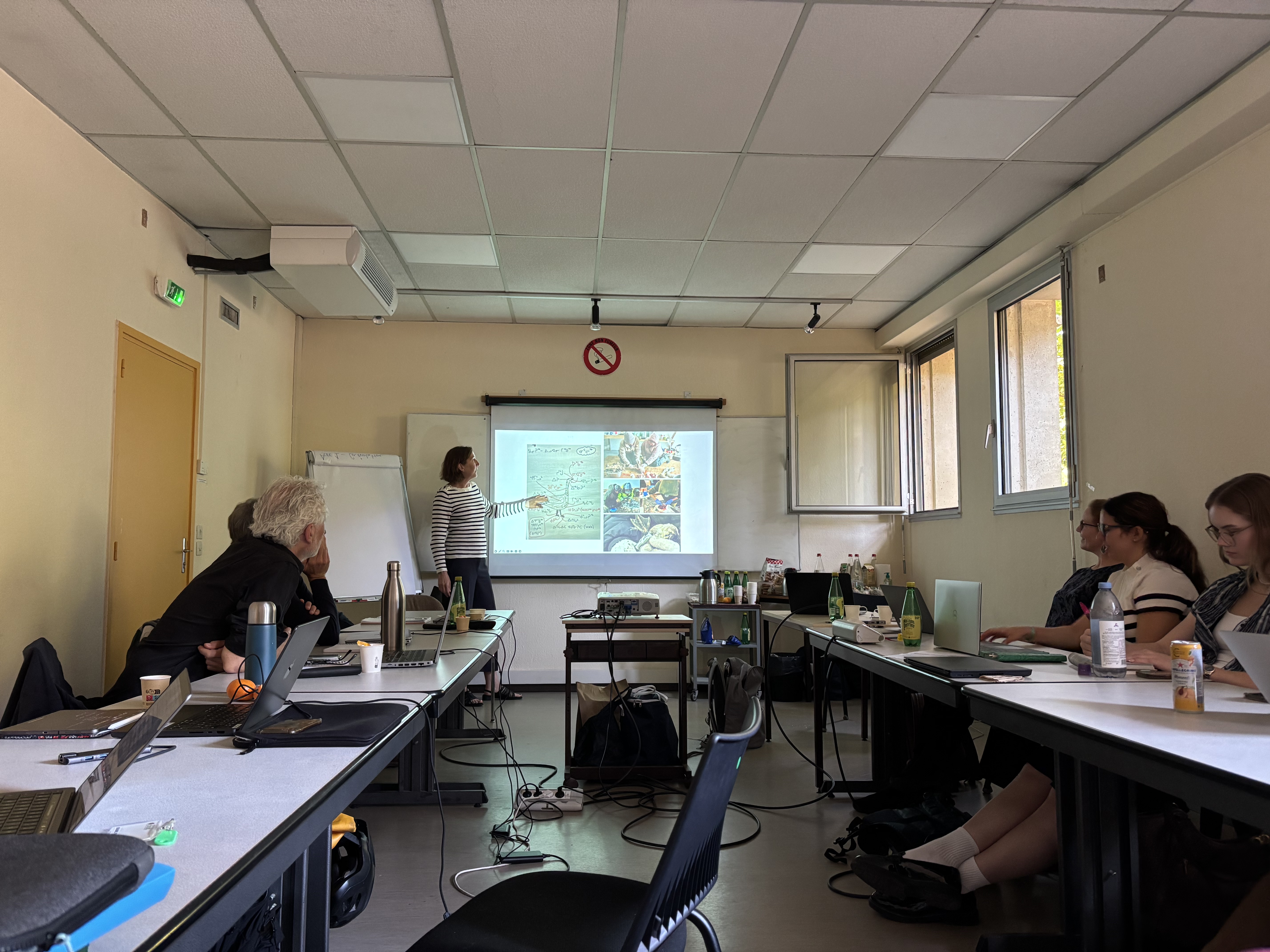
Presentations from the StraightUpNorth (SUN) Team included:
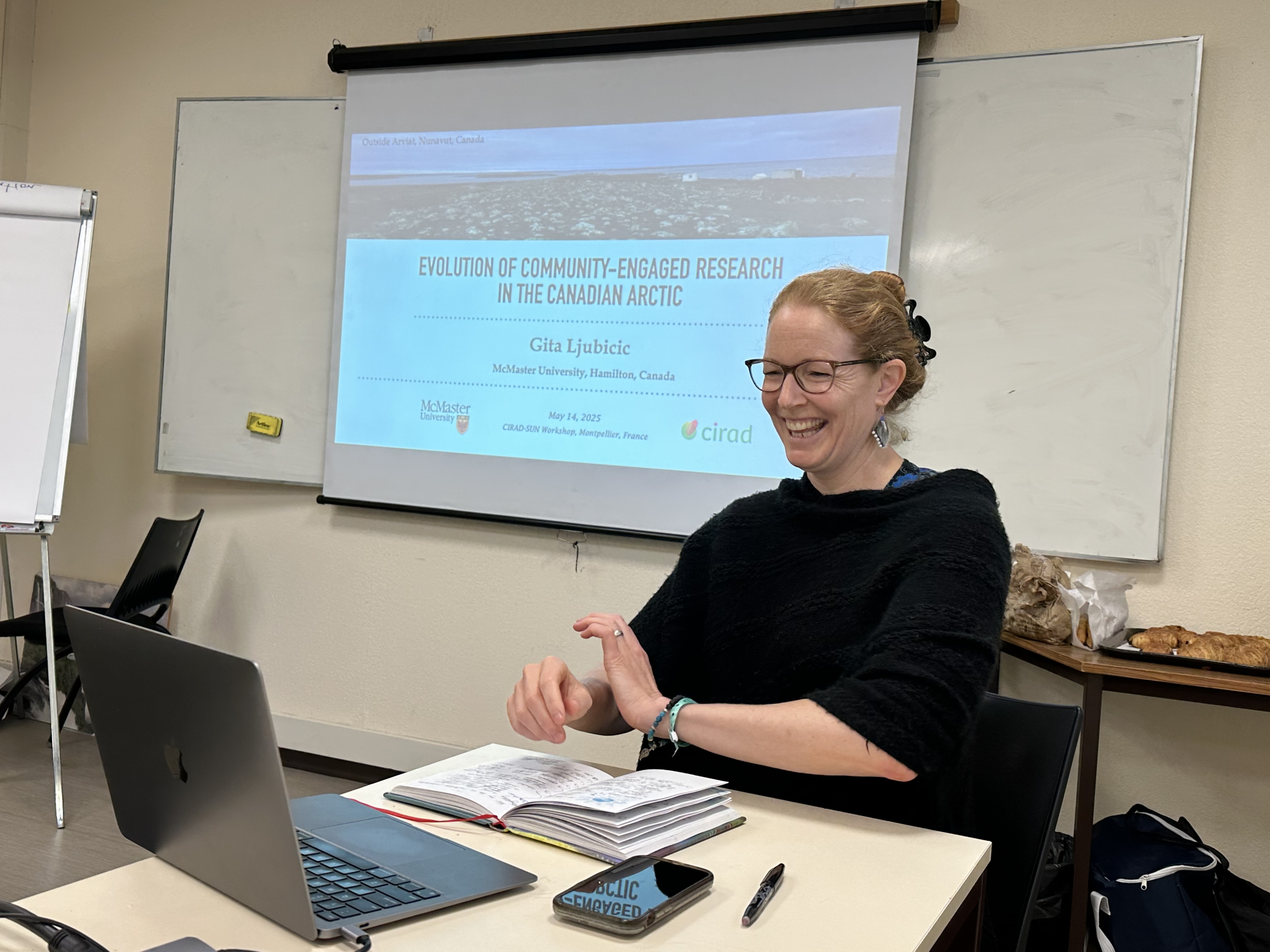
- An introduction to Inuit Nunangat and an overview of the evolution of community-engaged research in the Canadian Arctic (Gita Ljubicic);
- Insights from the Making Research Work for Nunavummiut project, which focuses on improving research licensing processes in Nunavut (Alexis Beltrano); and
- The evaluation framework developed for our community-led goose monitoring project in Arviat (Natalie Carter).
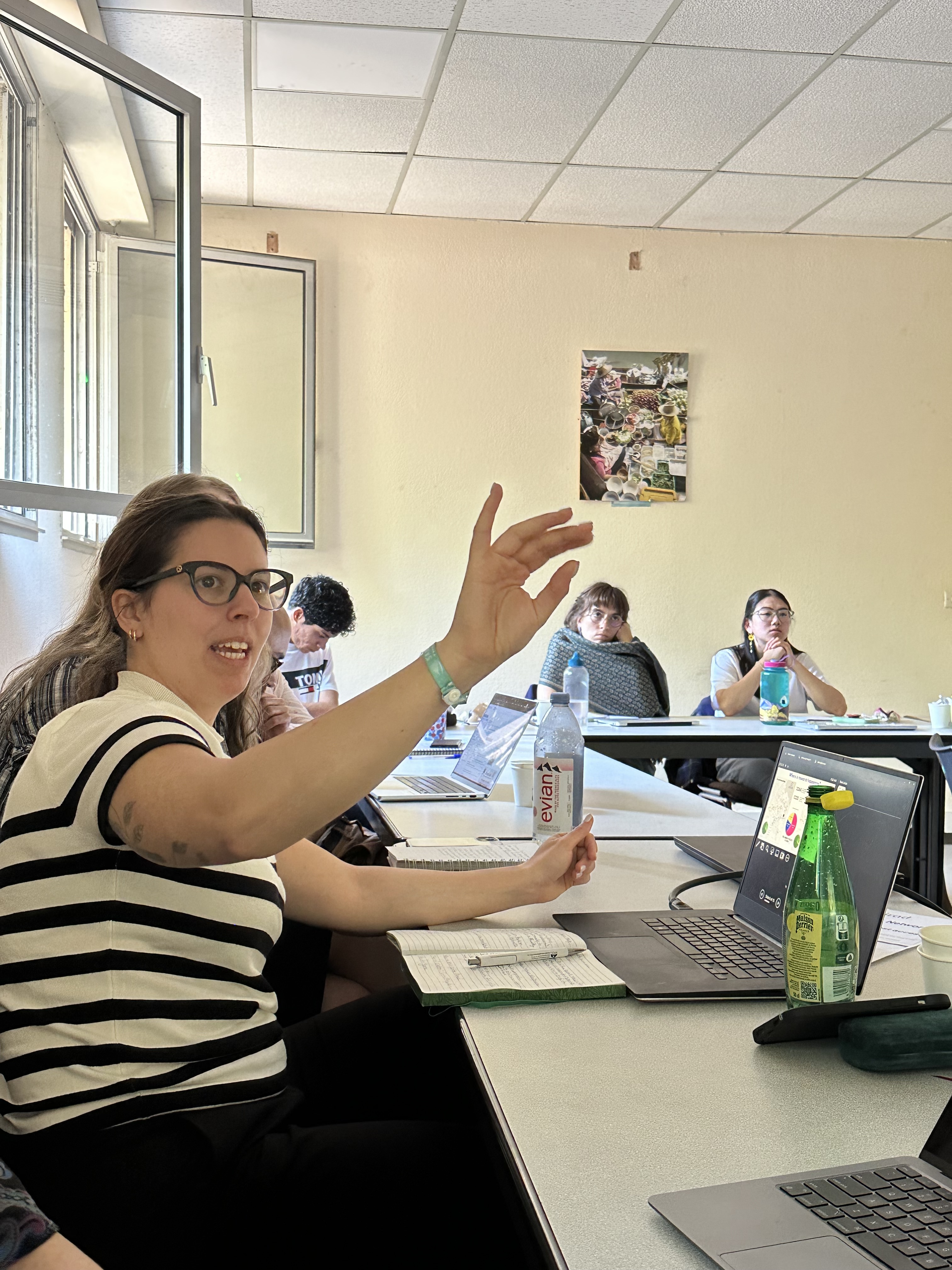
Emilie Coudel (UMR-SENS) also shared insights from citizen science initiatives, such as a citizen observatory in the Brazilian Amazon. She demonstrated how co-produced knowledge can empower local communities, especially youth and family farmers, to engage in environmental and political debates.

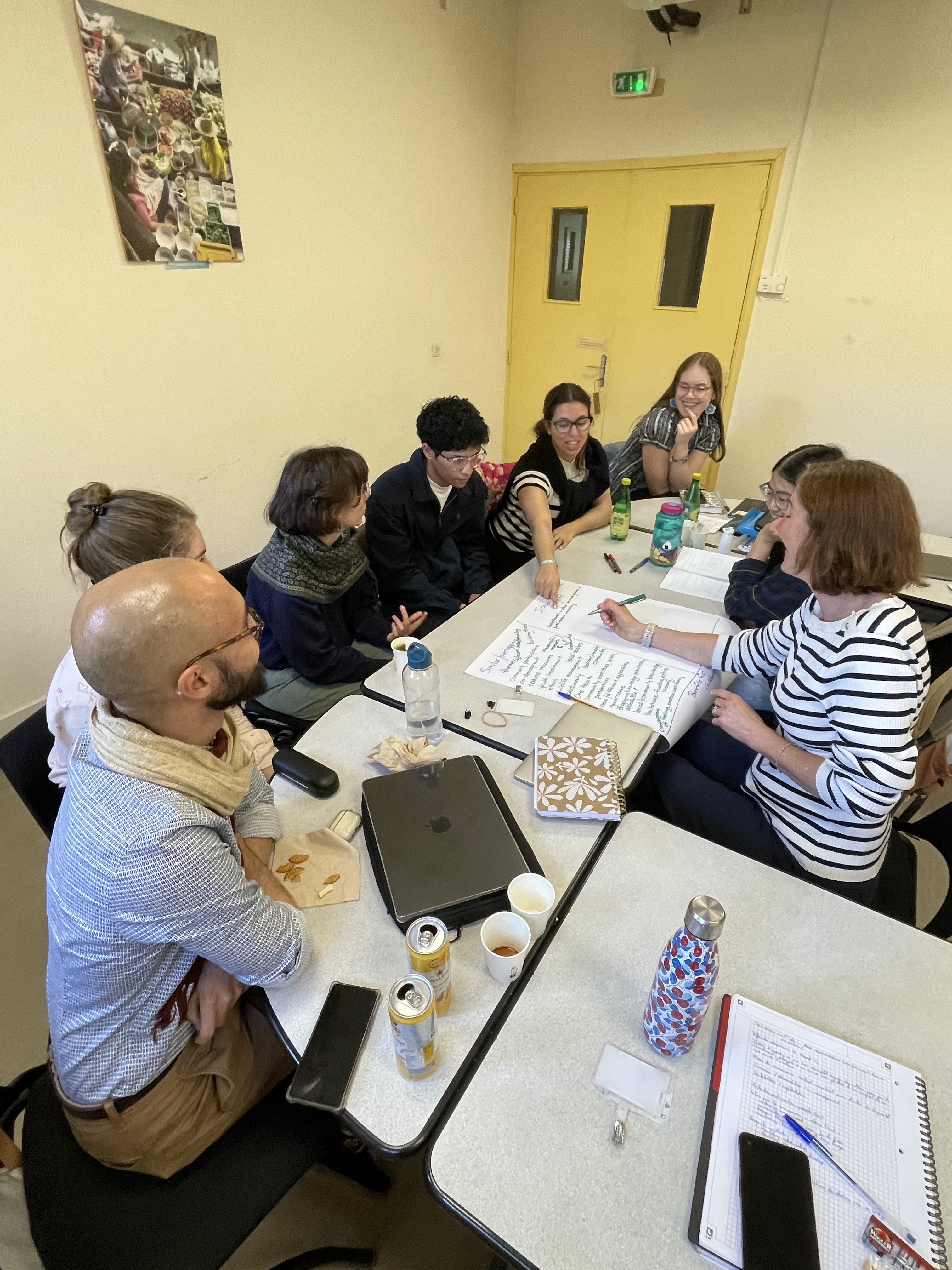
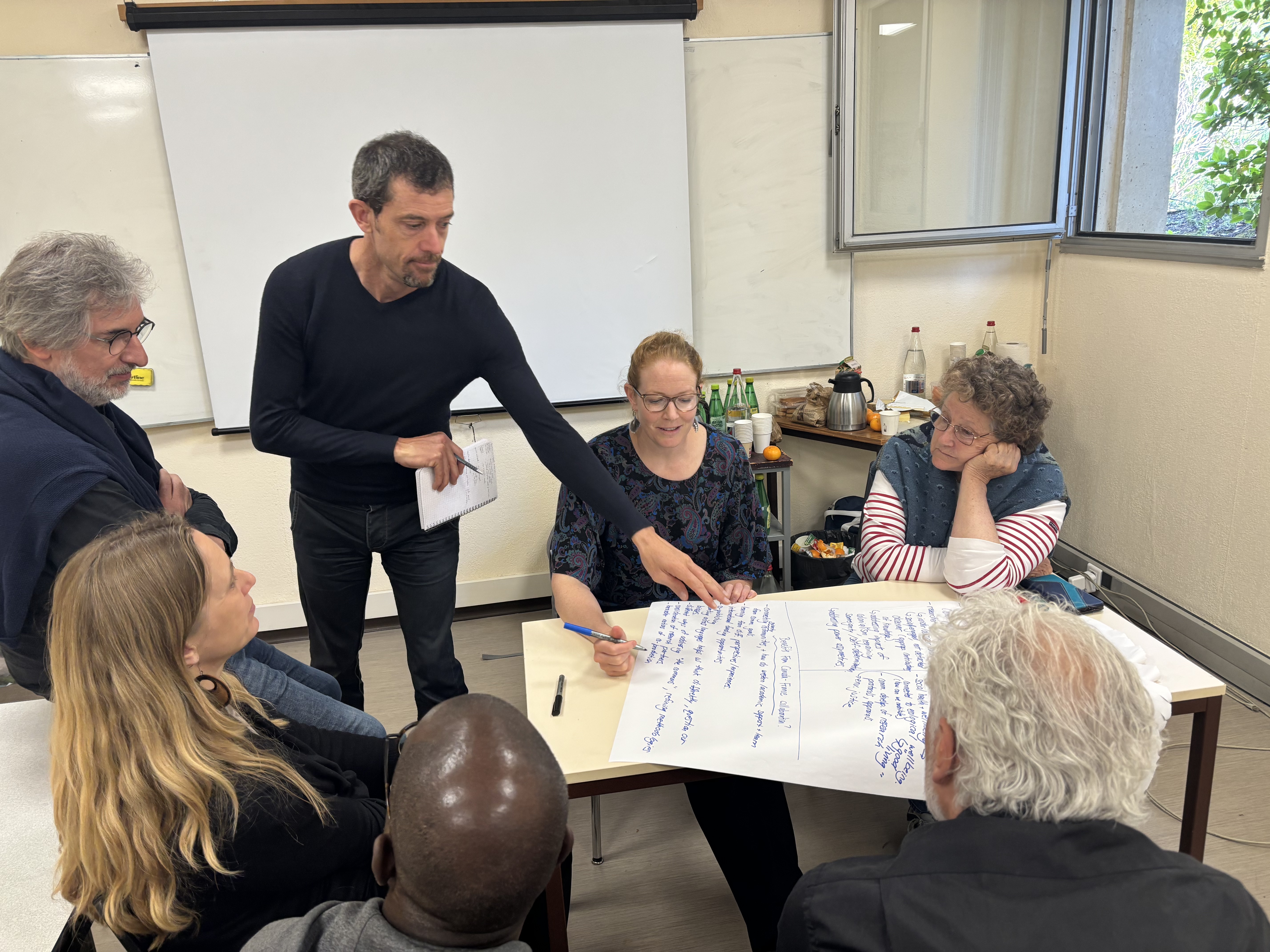
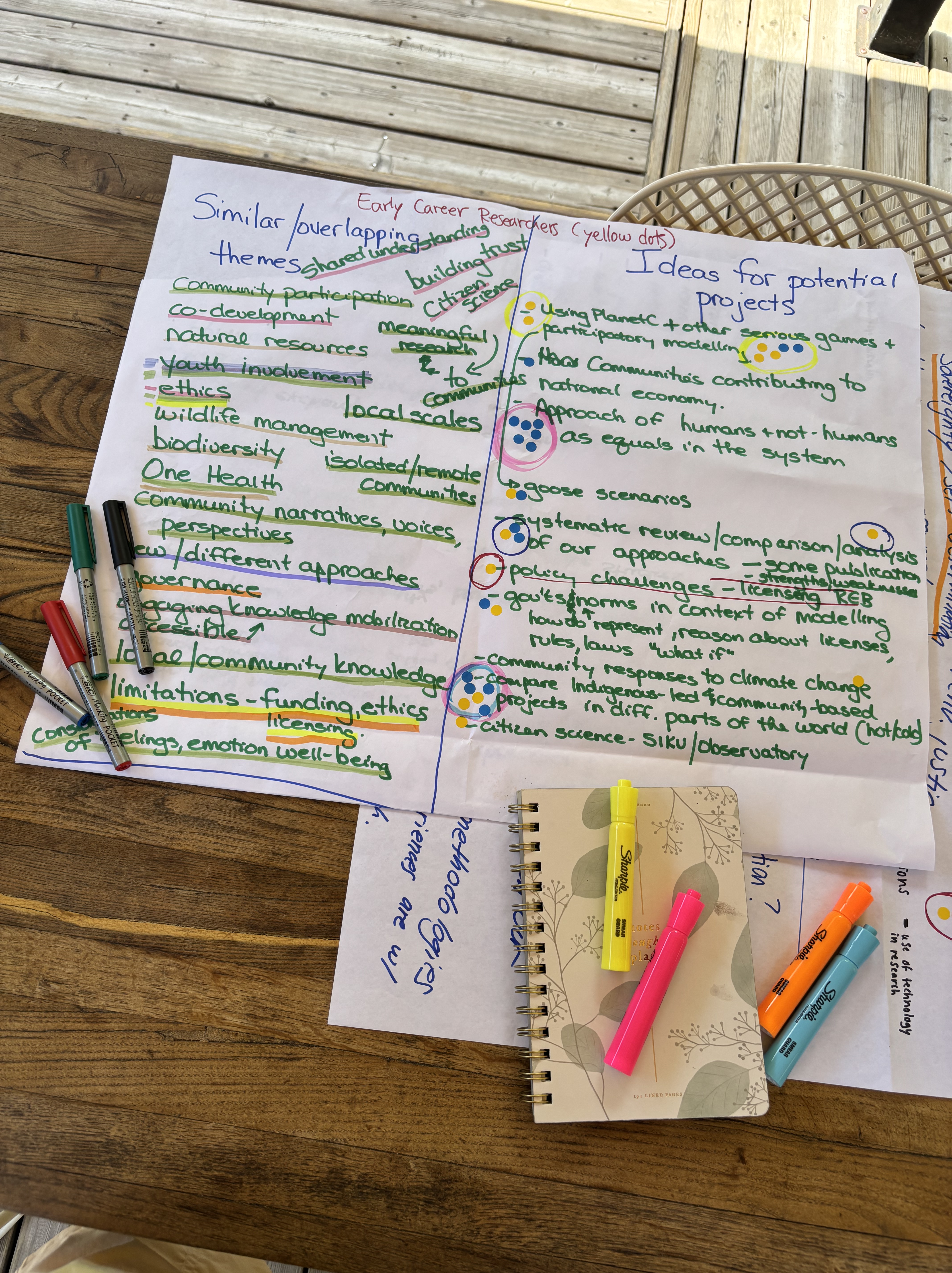
The workshop concluded with reflections on similar/overlapping themes between the two research groups, ideas for potential new projects, and the possible benefits of France-Canada collaboration. To do so, the CIRAD-SUN group split off into two groups: established and early-career researchers. It was interesting to reflect on the similarities and differences between our diverse community-engaged research approaches and to compare interests and project ideas from those at different career stages.
SUN Team Reflections and Visioning
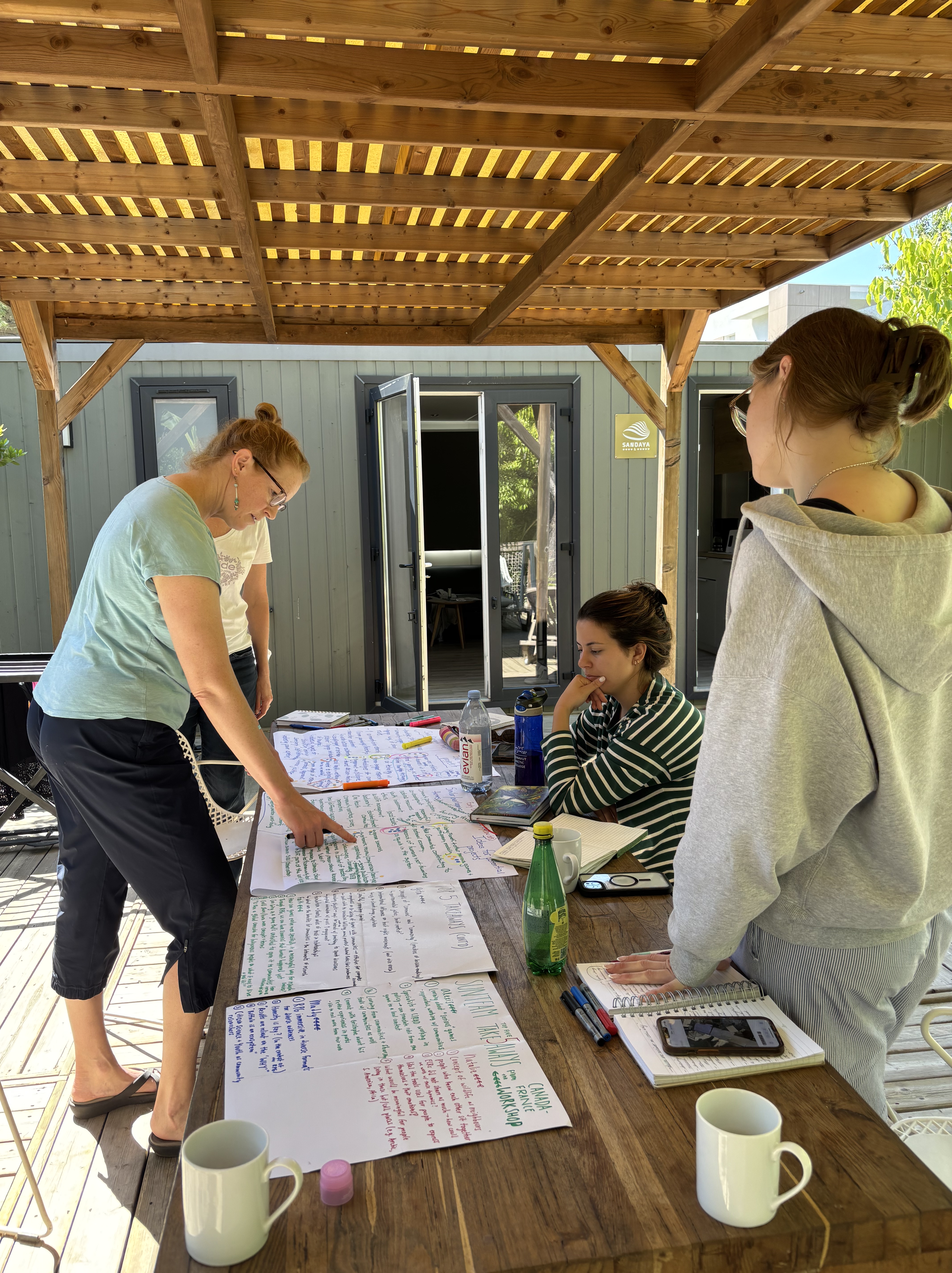
Within our SUN team, Gita facilitated a series of individual, paired, and group reflections and activities over a three-day period designed to help us think deeply about our core values along with personal and team goals. Through these conversations, we emphasized values such as trust, humility, integrity, compassion, selflessness, openness, and commitment, not just as ideals, but as everyday practices that guide how we work with each other and with community partners.
We talked about the importance of doing research that is community-driven, ethical, and useful, and about showing up with a willingness to learn, adapt, and support one another. Our goals included mentoring students, improving research licensing processes, supporting Indigenous data governance, and ensuring our work contributes meaningfully to community priorities. We also reflected on our individual paths including what we hope to learn, how we want to grow, and the kind of leadership we want to embody.
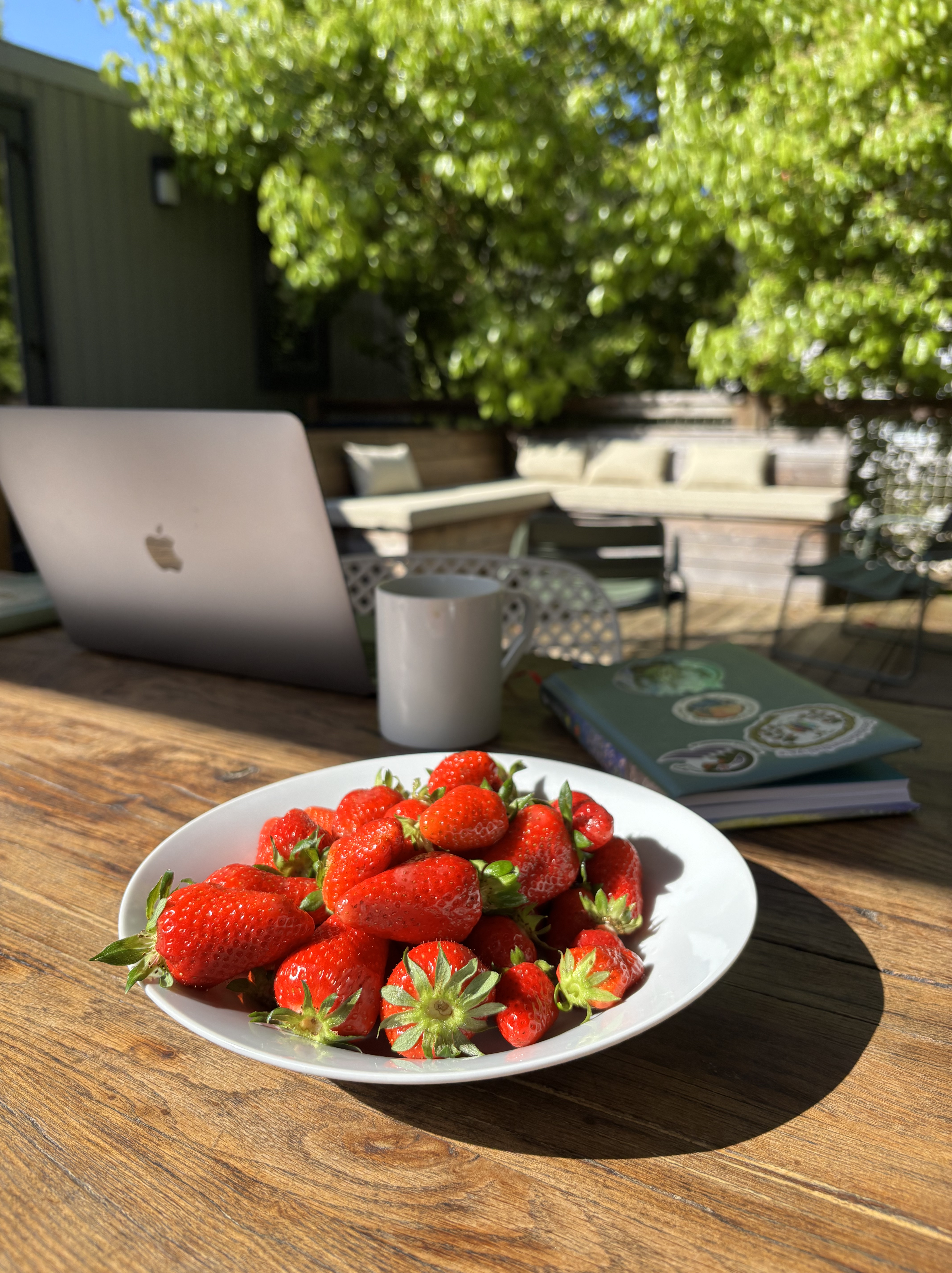
The time away from regular routines and responsibilities, along with having meetings outside surrounded by beautiful mediterranean trees and flowers, meant that we could be fully immersed in a thoughtful process of personal and collective reflection. This kind of team retreat was refreshing and inspiring, and led to a depth of discussion we had not anticipated. Our time together, in dialogue and in quiet contemplation, were integral in aligning our collective vision and enhancing our team dynamics.

French Cultural Experience
Outside of our professional commitments, we immersed ourselves in the local culture by:
- Exploring Montpellier’s historic sites, such as Place de la Comédie and Musée Fabre;
- Hiking in Clapiers Forest and visiting Saint-Guilhem-le-Désert in the Gorges de l’Hérault (a fan favourite and one of the prettiest villages in France!);
- Swimming in the Mediterranean Sea at Grau-du-Roi and having team discussions near the beach;
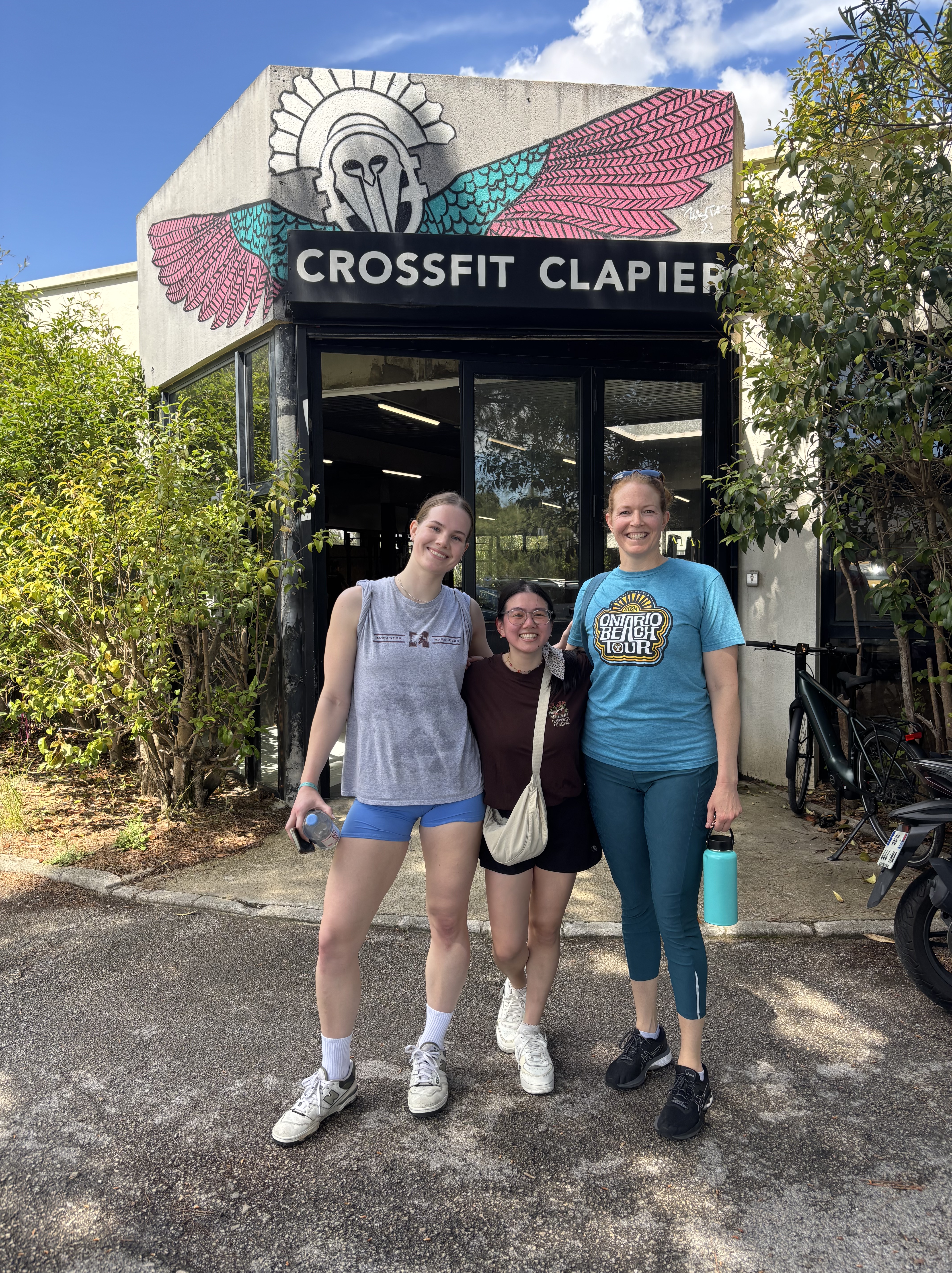
- Doing CrossFit at a local gym;
- Sampling regional and other cuisines at local restaurants; and
- Engaging with the community on bus and tram rides, lunches with CIRAD colleagues, and practicing our French with many people we met each day.


We also enjoyed swimming and relaxing by the pool after work and visiting with Gita’s family in their home-away-from-home. These experiences enriched our understanding of the region and fostered a deeper connection within our team.
Reflecting on the trip, several moments stood out:
- Engaging discussions with CIRAD researchers that sparked new ideas;
- Seeing flamingos in the wild; and
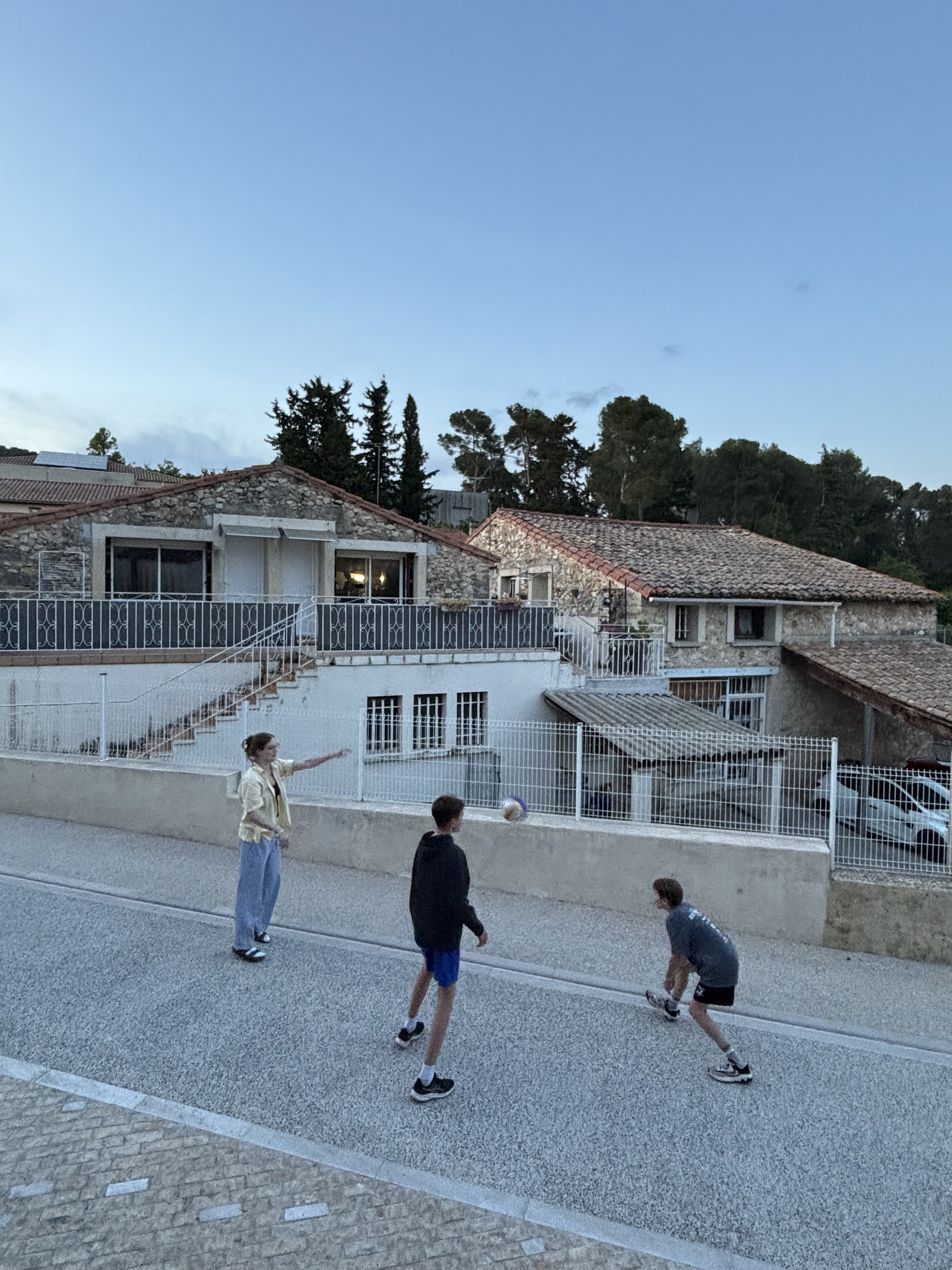
- Playing pepper, trying to solve mazes, and other games with Gita’s children.


Moving Forward
Building on the insights gained during this trip, we aim to:
- Strengthen collaboration and explore funding possibilities to work more closely with CIRAD;
- Integrate our team’s values more explicitly into our research practices and create associated resources to share with students and research partners; and
- Foster ongoing cultural exchanges to enrich our work and relationships.
We look forward to continuing our journey of growth and collaboration, inspired by the experiences and lessons from our time in France.
Merci
We are deeply grateful to Gita for her generosity, leadership, and hospitality throughout our time in France. Her support made this trip possible; from funding our time while in France, to welcoming us into her home, to personally guiding us through the landscapes and culture of the region. She not only introduced us to a remarkable network of colleagues at CIRAD, but also facilitated rich, reflective team discussions about our values, vision, and future as researchers. Her commitment to mentorship and collaborative growth set the tone for an inspiring and meaningful experience. Merci infiniment!
 StraightUpNorth.ca