
Trip summary by: Natalie Carter
Arviat, Nunavut (January 14 – 22, 2026)
All photos by: Natalie Carter
Purpose of Visit
Natalie Carter (SUN Team Community Engagement Lead) traveled to Arviat, Nunavut in January 2026 to continue collaborative work with Aqqiumavvik Society as part of our CIHR-funded Goose monitoring to restore Inuit food sovereignty project. The focus of the visit was our ongoing, iterative evaluation process that has been taking place throughout the lifetime of the work; planning for upcoming funding opportunities; and finalizing results sharing and administrative details related to project completion this year.
Together we:
- Shared project updates with our Research Advisory Committee;
- Engaged 16 Arviarmiut project team members in project evaluation activities;
- Met with Bert Dean (Nunavut Tunngavik Inc.), Environment and Climate Change Canada partners and other colleagues to discuss roadblocks and potential solutions for goose meat product development, processing, and distribution including permitting and funding as well as next steps for effecting policy changes related to Inuit rights to sell geese;
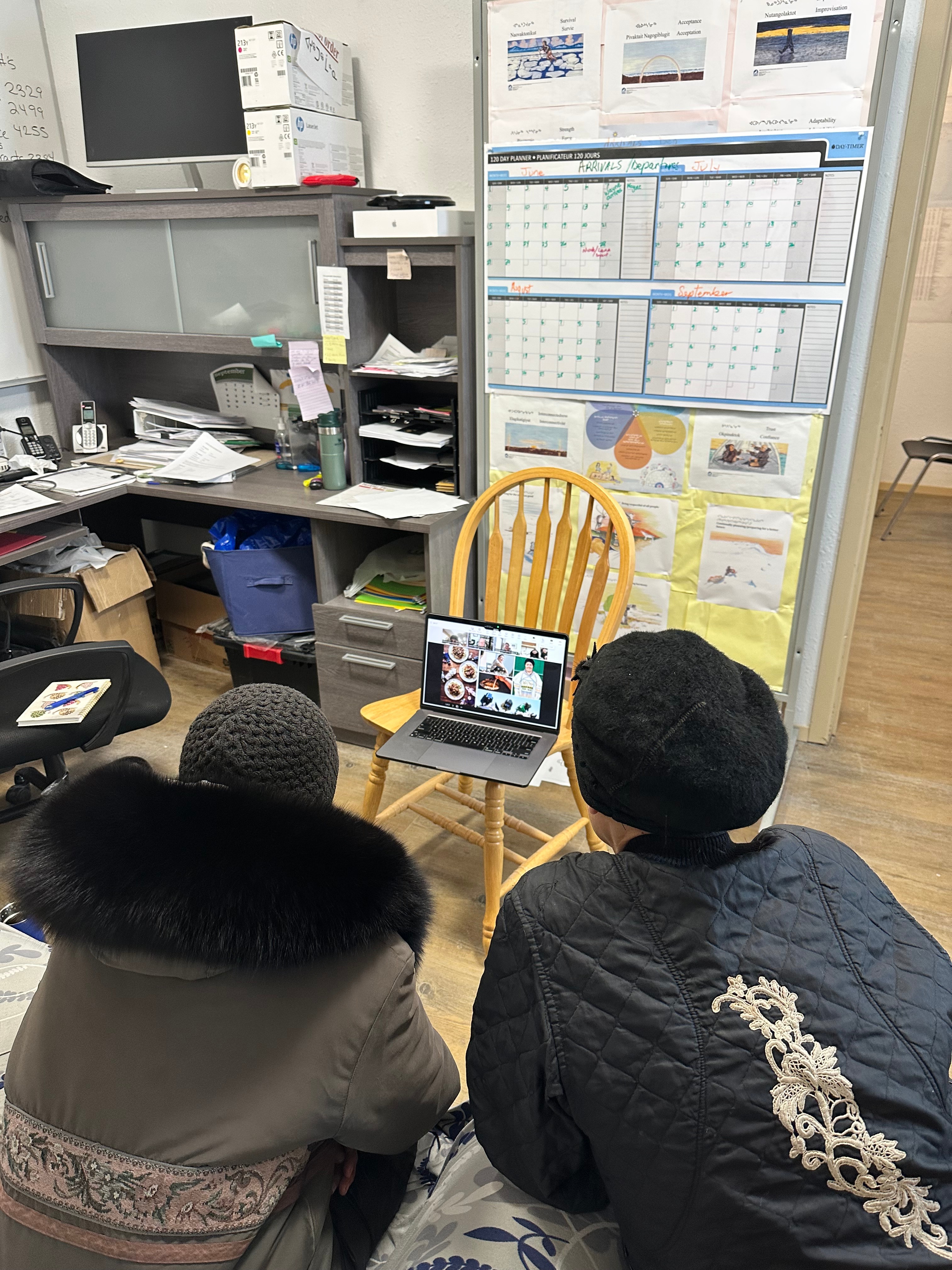
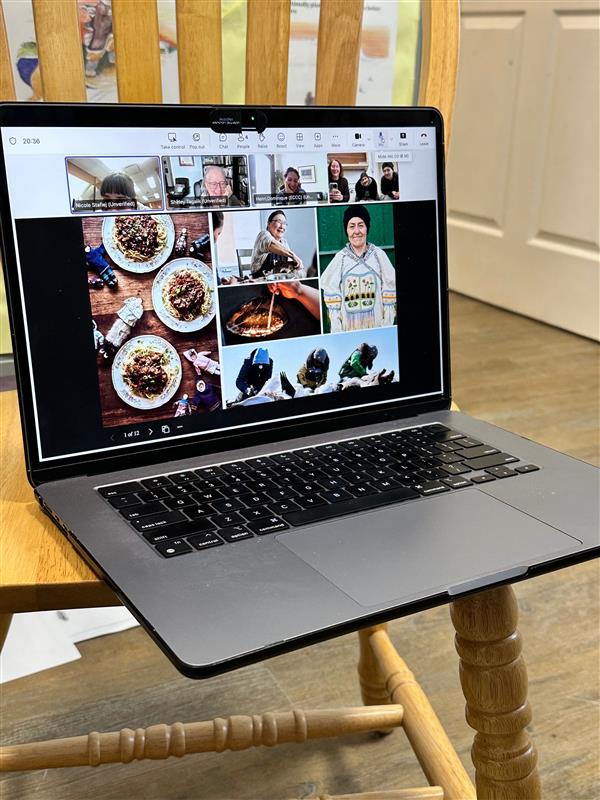
- Experienced a virtual tour of the Food and Nutrition Laboratories at McGill University hosted by project graduate student Nicole Stafiej. Following the tour, Shirley Tagalik and Aqqiumavvik Society community kitchen staff (Eva Suluk) and trainee (Celina Ivvaluajuk) offered guidance for next steps for Nicole’s ongoing goose nutritional analyses;
- Began co-developing a CIHR Partnership Grant proposal centered on promoting goose consumption, Inuit cultural practices/principles, operations and logistics, and capacity/training related to goose meat processing. We also identified preliminary research priorities, goals, and potential project partners; and
- Confirmed plans for final project outputs for our CIHR goose monitoring project.
Project Evaluation
The trip provided dedicated time for Natalie, with the Aqqiumavvik team, to meet with a wide range of Arviarmiut (people of Arviat) project team members to understand their perspectives on how it felt to work together as a team, what learning occurred, and what the goose monitoring project has meant for the community. The thoughts and stories Arviarmiut team members shared will help the project team do three things:
- Understand what worked well and what didn’t so that we can learn from it;
- Guide what happens next whether that is future research, new community projects, or more support for staff, young hunters, the community etc.; and
- Make sure the final evaluation truly reflects Arviarmiut experiences and perspectives.
We are guided by the Aajiiqatigiingniq Research Methodology to ensure consensus-building and collective decision-making across all research phases, in alignment with Inuit cultural protocols and to address community priorities. As such, we began our time together planning community interviews and focus groups, including refining the question set and confirming team member availability for discussions. To begin raising awareness about the evaluation discussions Shirley and Natalie hosted a half-day meeting with our Research Advisory Committee (RAC) (David Alagalak, Dorothy Aglukark, Arden Nibgoarsi and Lisa Gibbons) and team members Joe Karetak and Linda Kaviok). There, we provided project updates and learned about their perspectives on the overall project and the terminology workshops conducted during our project.
Later in the week, Natalie spent additional time with RAC members Dorothy Aglukark and Joe Karetak to better understand their perspectives as they had been involved in many key aspects of the project in addition to their RAC role. Bringing this group together to share ideas collectively (aajiiqatigiingniq) before beginning interviews, is central to the ARM.
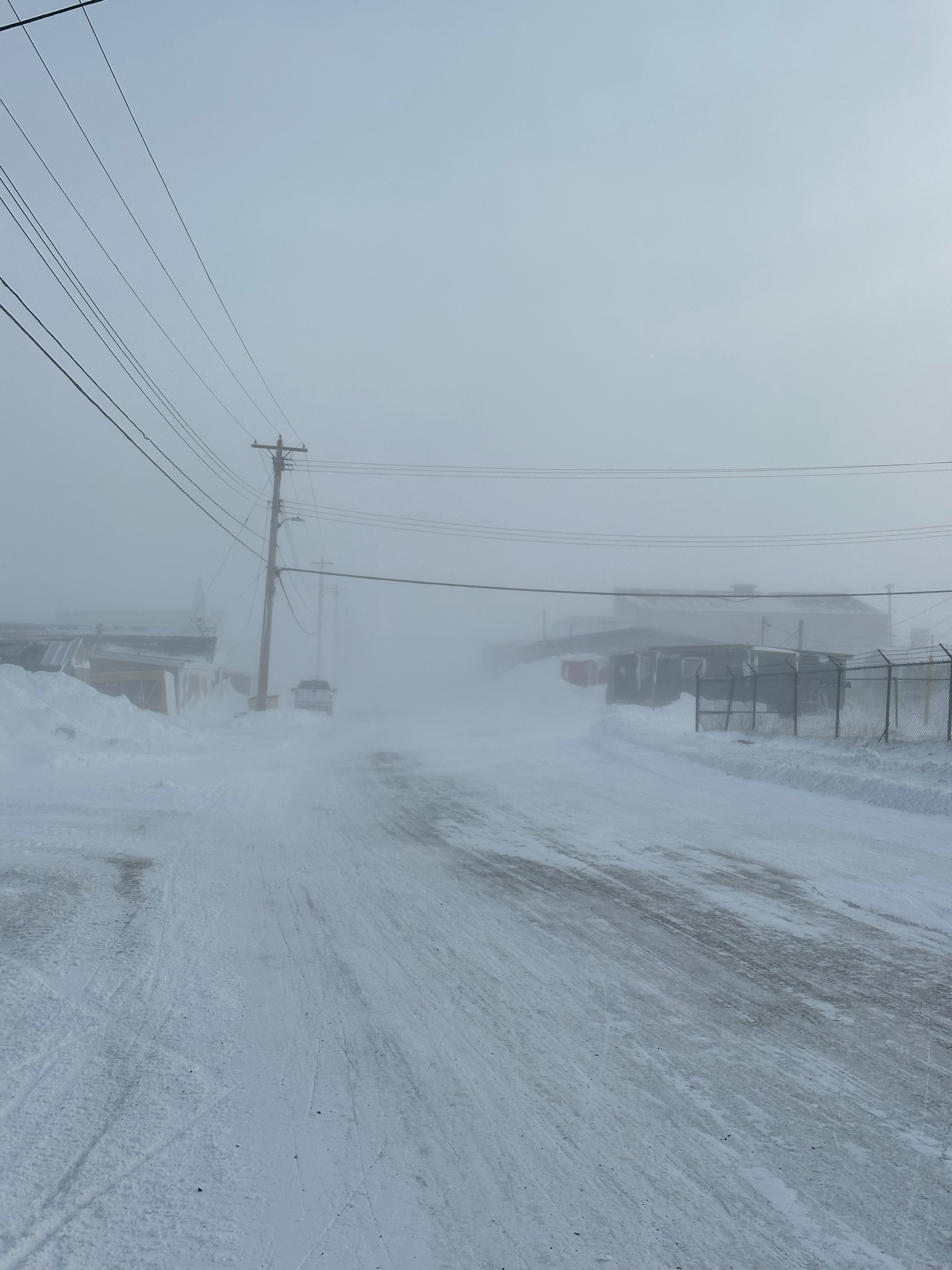
Over the course of two weeks Natalie and Shirley (when not trapped indoors by multiple blizzards that swept through town) met with Aqqiumavvik Society leadership (Kukik Baker) and present and past staff (Darryl Baker, Ramon Kaviok, Jimmy Muckpah, Karoo Muckpah, Lucas Owlijoot, Natalie Owlijoot, Chris Suluk), community kitchen leader (Eva Suluk) and trainees (Celina Ivvaluajuk and Angelina Suluk) in small groups, pairs, and one-on-one. These discussions while semi-structured, unfolded informally around kitchen tables while sipping hot beverages, during check-ins in the office, and while reviewing materials together, reflecting the relationship-based approach that continues to guide our collaborative work in Arviat.
What we heard from Arviarmiut about the Goose Monitoring Project
Key Impacts on the Community
Arviarmiut team members told us that the project has helped them, and their fellow community members, reconnect with geese and with country foods in a meaningful way. Confidence in eating geese has grown because the community now has clear evidence that local geese are healthy and safe. This has reduced earlier worries about avian flu and contaminants. As a result, more people, especially youth, are harvesting, eating, sharing, and talking about geese again. This is strengthening both food security and cultural practice.
We also heard that the work has brought important knowledge back into view. Stories about the historic goose harvesting ban, cultural harvesting practices, and Inuktitut terminology helped people make sense of why goose use declined in the past and what needs to happen to rebuild the relationship between Inuit and geese. Elders’ guidance and the new terminology created through the project strengthened local capacity for future monitoring and stewardship on the land.
The role of the Young Hunters stood out in many conversations. Youth are becoming visible experts and strong role models for others in the community. Their work is helping to normalize goose harvesting again and is bringing this knowledge back into households. The project also showed how capable Aqqiumavvik Society is in leading research, banding, monitoring, and contaminant sampling. People said this shifted credibility and decision-making back into the community.
Key Personal Experiences
People described the project as a very positive experience across cultures, ages, and organizations. Staff, Elders, and project leadership all talked about the strong relationships, respect, humour, and shared learning that developed while working together on the land. They noted that southern-based graduate students integrated well into community life and formed friendships that felt genuine.
The project created meaningful turning points for the young hunters. They became confident banders, learned to hunt geese successfully, contributed to real research, and were recognized publicly for their skills. They especially enjoyed sharing geese and eggs with Elders and their families. Elders said they felt joy in contributing knowledge, teaching hands-on skills, and rediscovering old terminology. Many described the experience as grounding, purposeful, and motivating.
The time that northern- and southern-based team members spent together on the land built strong relationships across age groups and backgrounds. That was “the magic” that set this project apart from many others that Aqqiumavvik has collaborated on. While some Arviarmiut began the collaboration with a healthy dose of skepticism the way that southern-based team members approached their work as people first and scientists second quickly changed their minds. Travelling, cooking, harvesting, laughing, talking, and facing challenges together created a sense of shared purpose that people described as one of the most important parts of the project.
Key Learnings
A major theme was that learning is a collective and ongoing process. People emphasized that all learning is research, and that hands-on work through the ARM and piliriqatigiingniq is what turns information into real knowledge and skills. The project also showed the value of a holistic approach. Bringing together cultural knowledge, contaminants testing, goose health, harvesting, mapping, policy, and nutrition to name a few produced stronger results than working on these topics separately.
Youth were highlighted again as the key to sustaining knowledge over the long term. They learn quickly, share information at home, influence decisions in their households, and support cultural revitalization. Their involvement is essential.
People also explained how important terminology and historical context are. Reviving Inuktitut terms and talking about the history of the goose ban helped make sense of present-day behaviours and improved confidence in harvesting. Finally, clear and trusted communication is vital. Posters, hands-on demonstrations, and regular updates about goose health and avian flu are needed to counter misinformation and maintain trust in the community.
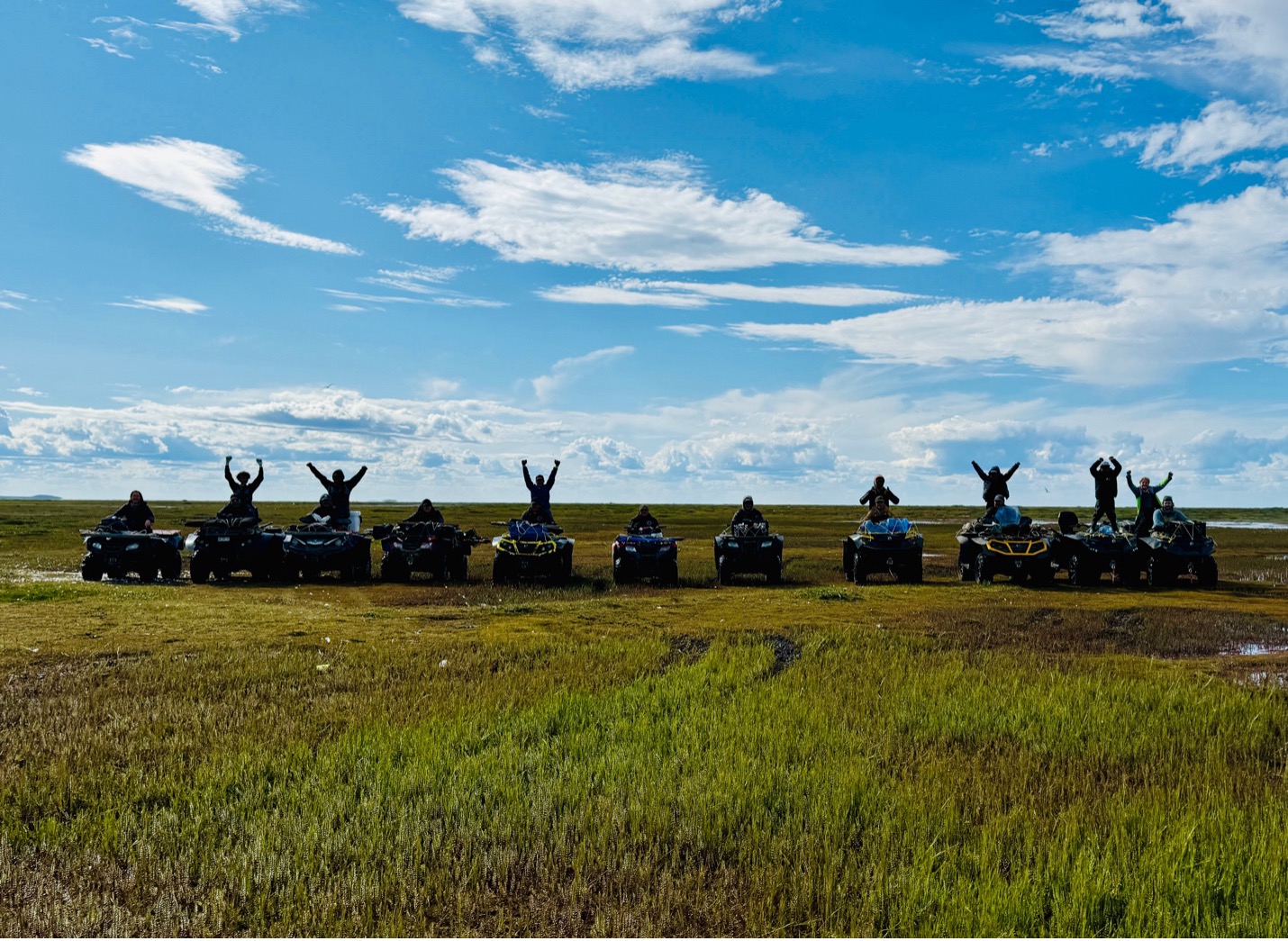
Young Hunters and Aqqiumavvik Staff involved in goose banding in August 2024. (Credit: Aqqiumavvik Society)
In Closing
This time together in Arviat provided an important opportunity to consolidate work across our project. Meetings throughout the week reinforced the importance of:
- Ensuring clarity on consent and appropriate naming in publications;
- Completing final knowledge-sharing material;
- Refining evaluation outputs to reflect community voice;
- Supporting goose policy work and follow-up from earlier town halls; and
- Beginning structured planning for the 2027 Partnership Grant.
Ma’na
Thank you to all the Aqqiumavvik Society staff (present and past), Elders, and community members who so warmly welcomed me (back) while in Arviat. Thank you to Nicholas Arnalujuak as he interpreted between English and Inuktitut. Thank you all those in Arviat who shared their time with me. Thank you to the Nunavut Research Institute for providing affordable accommodations in Arviat without which this trip would not have been possible. Thanks to all involved for dedicating your time and effort, to make this project so meaningful, and the outcomes so valuable.
We are continually grateful for the warm welcome in Arviat and to all those who share their time and knowledge in contributing to this project.
 StraightUpNorth.ca